GATLING VS NEOLOAD
Switch to load testing
your engineers actually own
NeoLoad records tests in a GUI. Gatling's tests are source files your team writes, reviews and refactors like any other code. That's the whole difference, and it decides everything downstream: who can write a test, what happens when the API changes, whether a performance gate runs on every deploy or once a quarter.
No spam. Just the comparison, straight to your inbox.


NeoLoad keeps your tests in a platform. Gatling keeps them in your codebase.
If your performance tests are written by the people who write the service, you want an engine. If they're written by a team that serves many services, you want a platform. Gatling and NeoLoad are good at opposite ends of that.
Neoload
GUI recorder, controller and load generators, with runtimes for SAP, Citrix and terminal applications.
Gatling Community + Gatling Enterprise
Open-source core, enterprise platform, built only for performance.
.avif)


Native runtimes for SAP GUI, Citrix and terminal applications. Systems most load testing tools can't touch.

GUI-first authoring, a proxy recorder and automatic correlation. Approachable without a coding background.

Scale comes from adding machines rather than doing more per machine. Published sizing is 1,000–2,000 simple HTTP users on an eight-core generator.

NeoLoad has a YAML path. It covers environment config and overrides, and full test design for API testing. Everything else stays a GUI project.

Test-as-code in Java, JavaScript, TypeScript, Kotlin, and Scala. The same repo, build, and review flow as your app.

60,000 virtual users or 300,000 requests/second per load generator. 5M+ concurrent users on a 20-generator fleet.

HTTP/S, WebSockets, SSE, gRPC, MQTT, JMS natively, plus Kafka, AMQP, and JDBC databases via plugins.

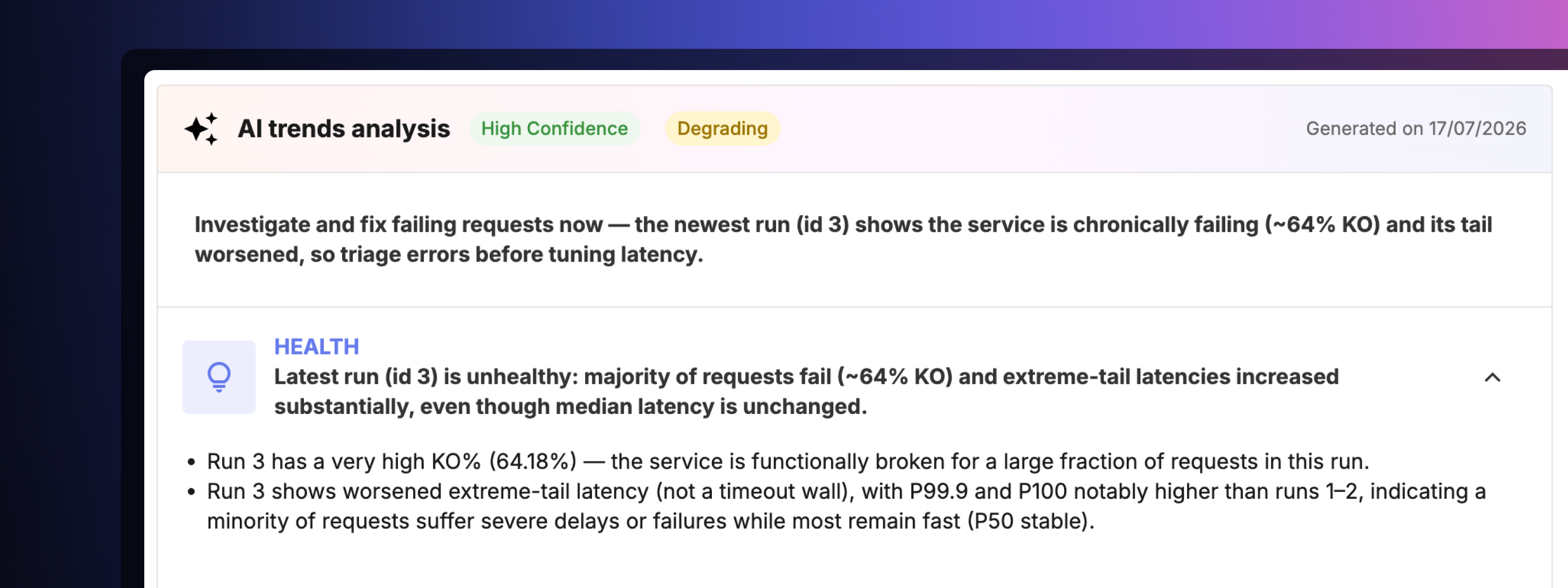
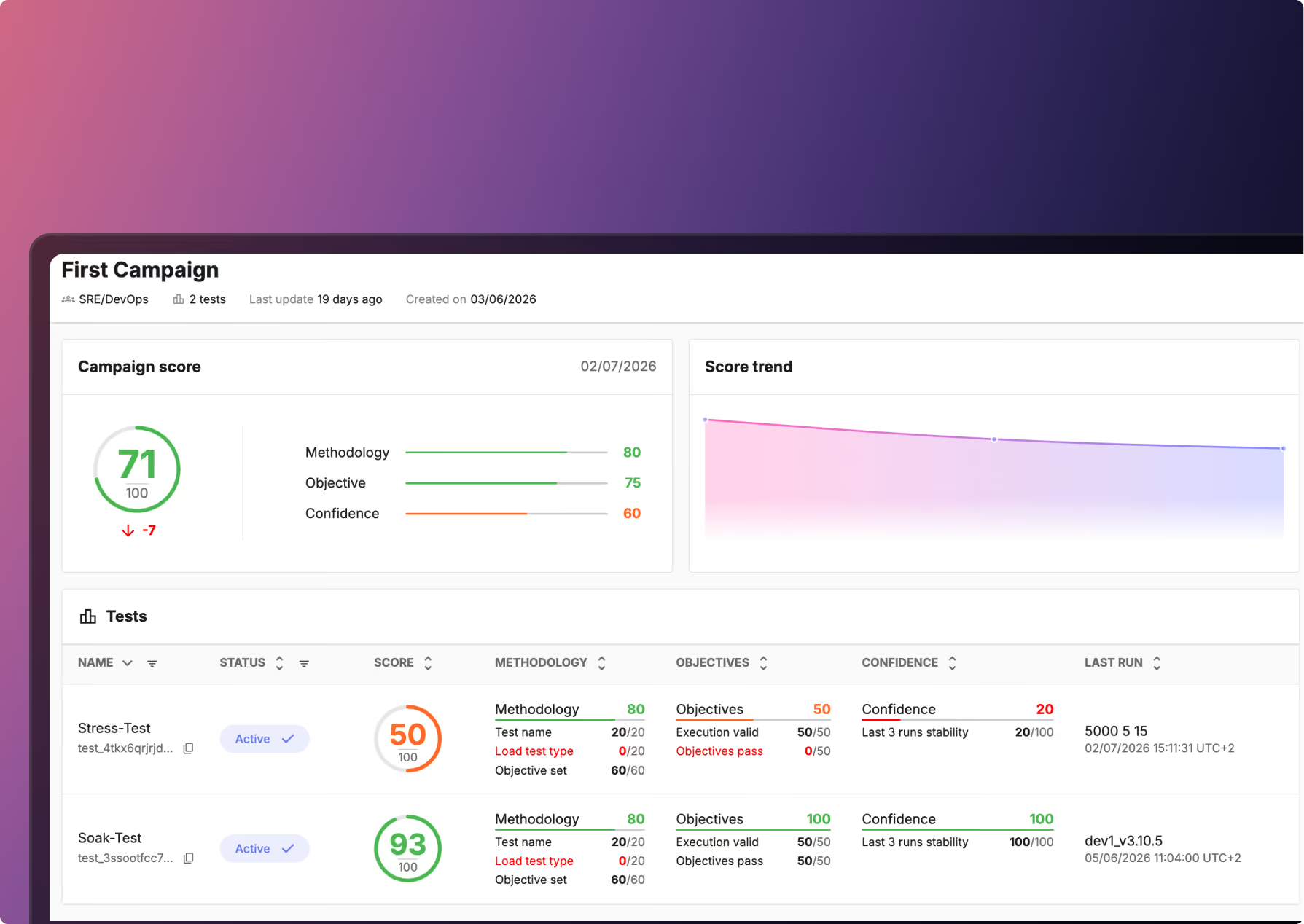
After the run: AI analysis, SLO compliance, trends, comparisons, and a campaign score that moves over time.
What Neoload's GUI costs you
NeoLoad's codeless design is a genuine advantage for a mixed-skill QA team. It's also the source of four specific costs that only show up six months in.

A 50,000-user test is 25 to 50 machines
NeoLoad's published sizing is roughly 1,000–2,000 simple HTTP virtual users per eight-core, 64 GB generator. Gatling's load generation engine puts 60,000 on one. Somebody has to provision, warm and pay for the difference every time you run.

Testing becomes scheduling
NeoLoad ships resource reservation: you book controllers, generators and virtual users by date and duration, so two teams don't collide. Necessary, when capacity is annual and shared. It also means the answer to "can I run a load test this afternoon" is sometimes no.

The AI can drive their platform, not their tests
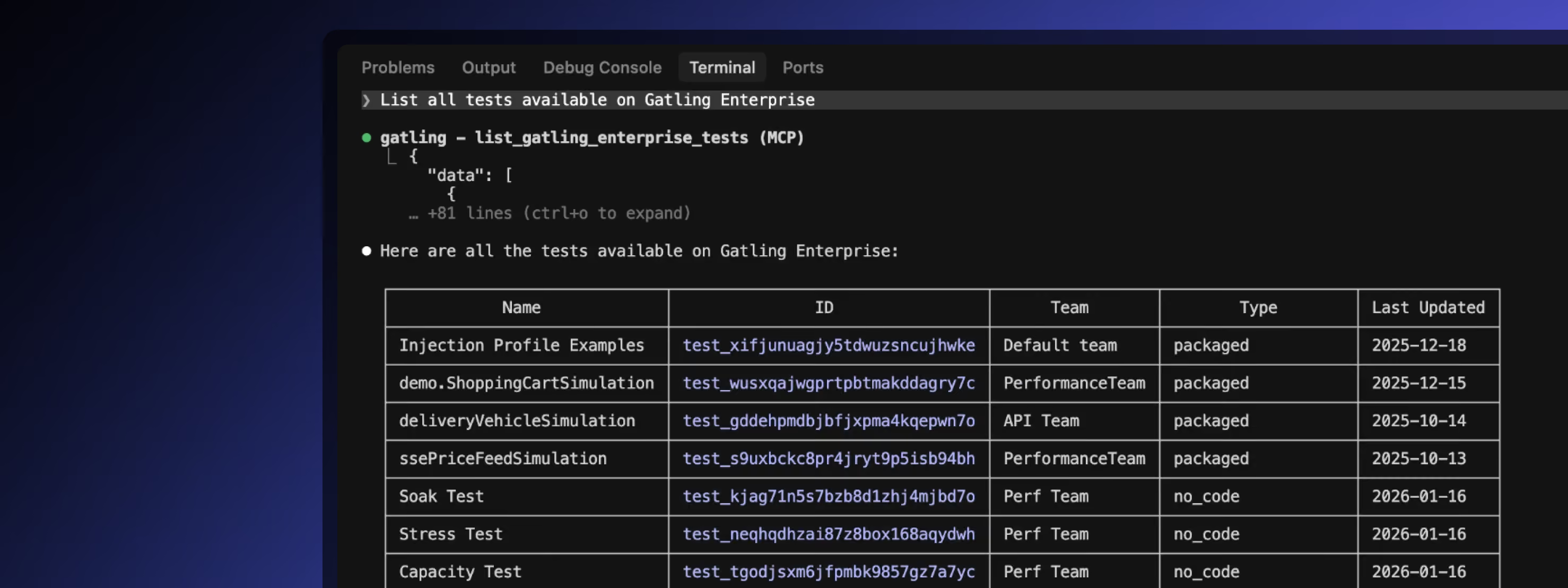
NeoLoad's MCP operates the platform. The user path you actually maintain is a proprietary artefact with no public corpus behind it. A Gatling simulation is ordinary Java, Kotlin, Scala, JS/TS, so any coding assistant reads it, refactors it and fixes a broken extractor without a vendor feature in the loop.

Your load tests can't be reviewed like code
NeoLoad works with Git and SVN, and its YAML diffs cleanly. The graphical project doesn't, and a reviewer can't approve a change they can't read. Gatling simulations are source files, so your existing review process already covers them.
An engine that doesn't waste a single CPU cycle
A single machine caps out around 64,000 concurrent sockets per target. Gatling’s engine is built to use nearly all of them.