GATLING VS K6
Running the load test
is the easy part
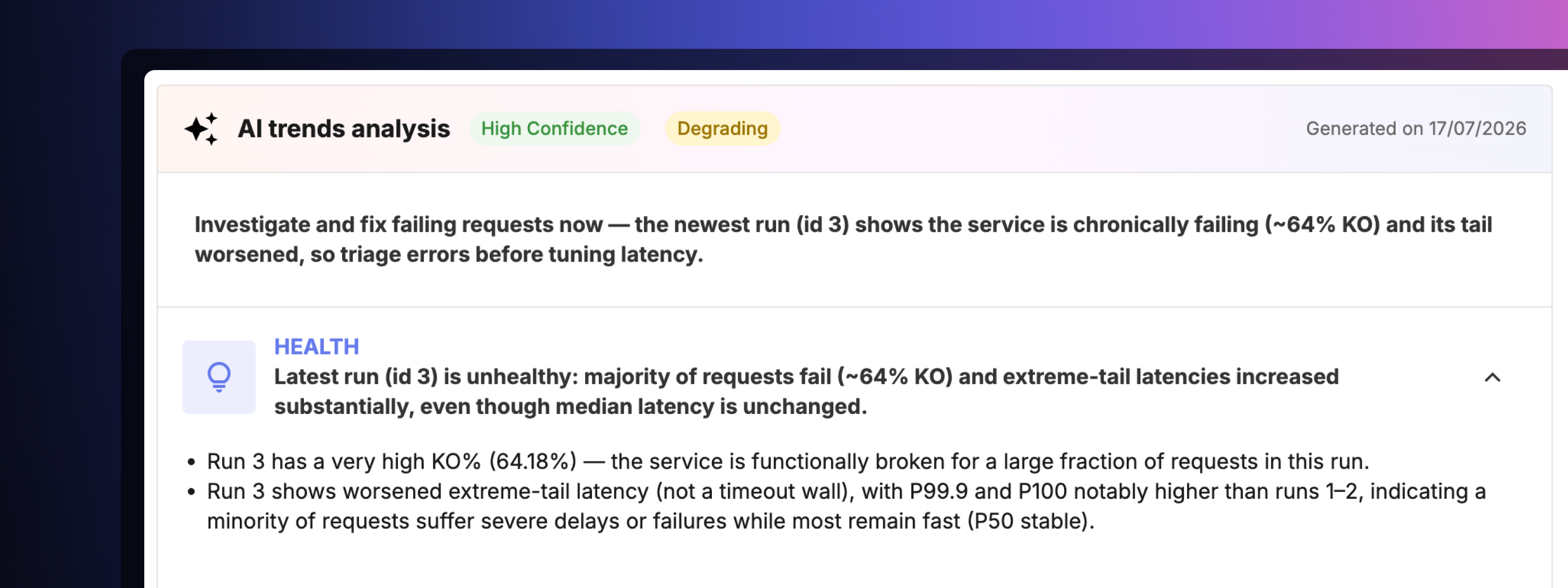
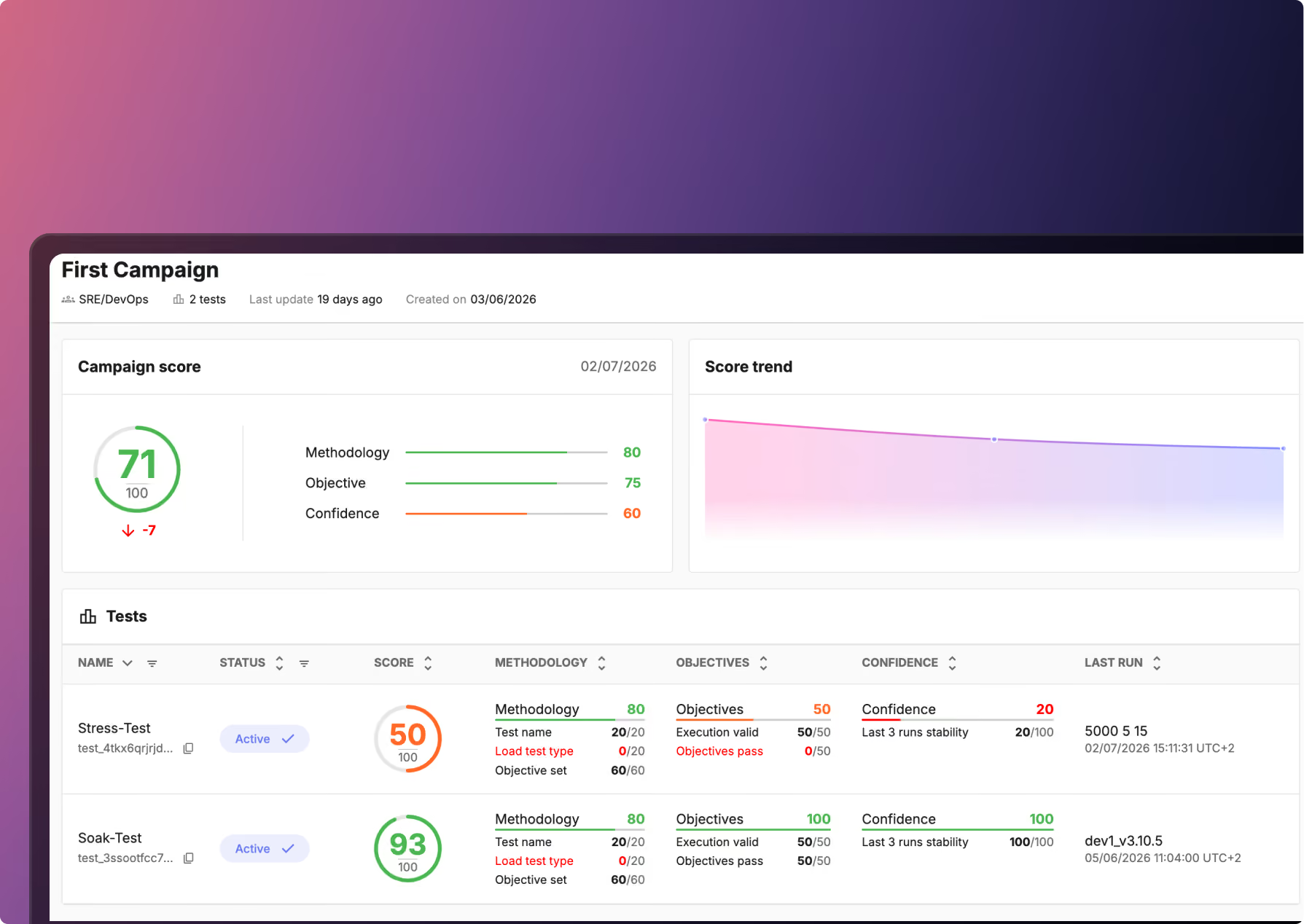
k6 and Gatling both generate load efficiently, that argument is over. The difference is everything after the run: AI that reads your results across runs, SLOs you set visually, campaign scores your leadership can track.
In Java, JavaScript, TypeScript, Kotlin, or Scala.
No spam. Just the comparison, straight to your inbox.

k6 fits the team that writes JavaScript. Gatling is built for the whole engineering organization.
If your entire stack is JS and you live in Grafana, k6 is a genuinely good tool, and we say it twice on this page. But most engineering organizations aren't one language, one dashboard, and one team. That's the gap this comparison is about.
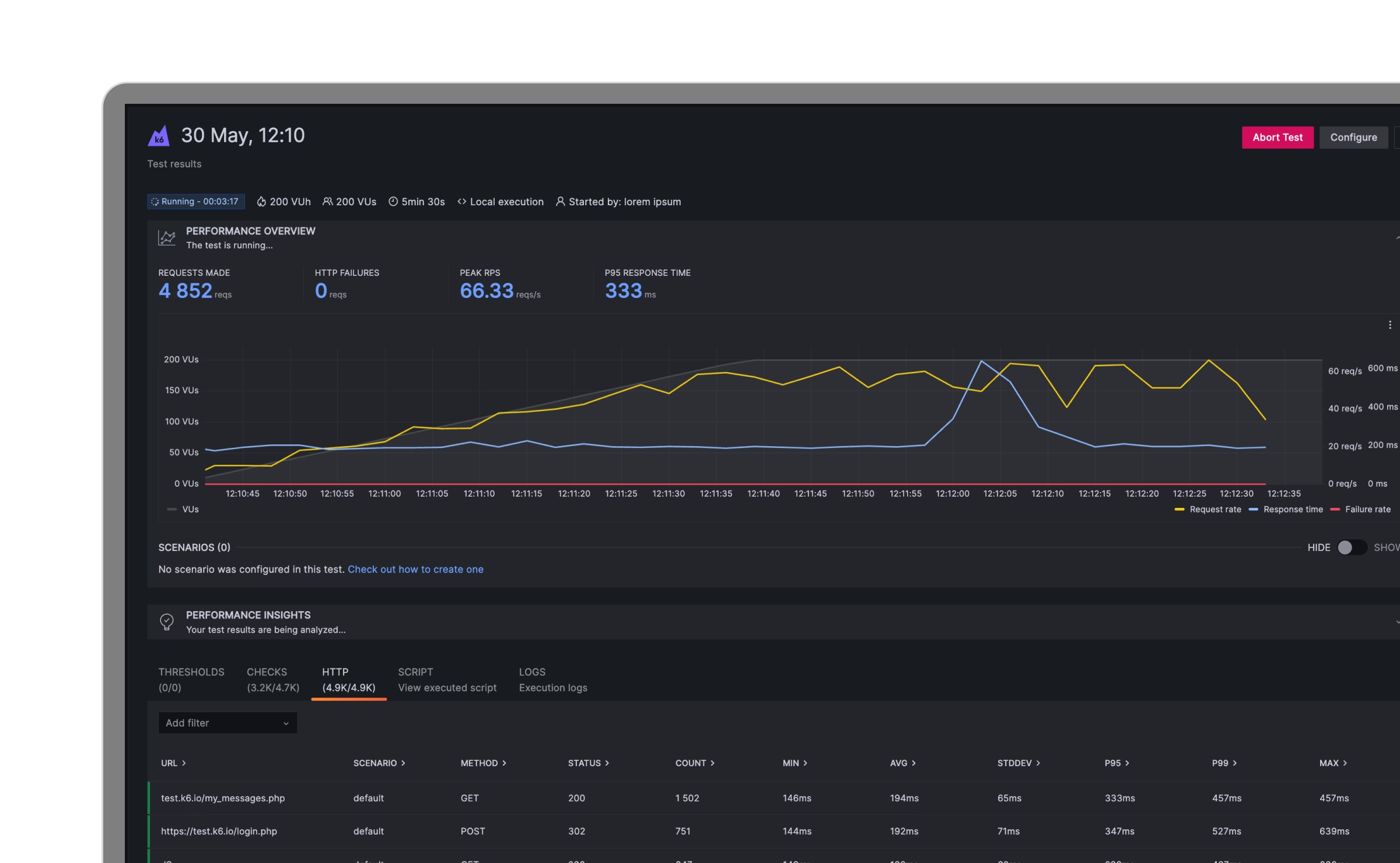
k6 + Grafana Cloud
JavaScript-only, Grafana-native, strongest inside that ecosystem.
Gatling Community + Gatling Enterprise
Open-source core, enterprise platform, built only for performance.


Scripting in JavaScript or TypeScript. A fit if your team writes JS, a wall if it doesn't.

Protocol-level load plus real-browser user journeys with Web Vitals.

Single dependency-free binary; Projects group tests, but carry no score or trend across them.

Metrics exploration through Grafana Explore. Powerful, if Grafana is already your stack.

Test-as-code in Java, JavaScript, TypeScript, Kotlin, and Scala. The same repo, build, and review flow as your app.

60,000 virtual users or 300,000 requests/second per load generator. 5M+ concurrent users on a 20-generator fleet.

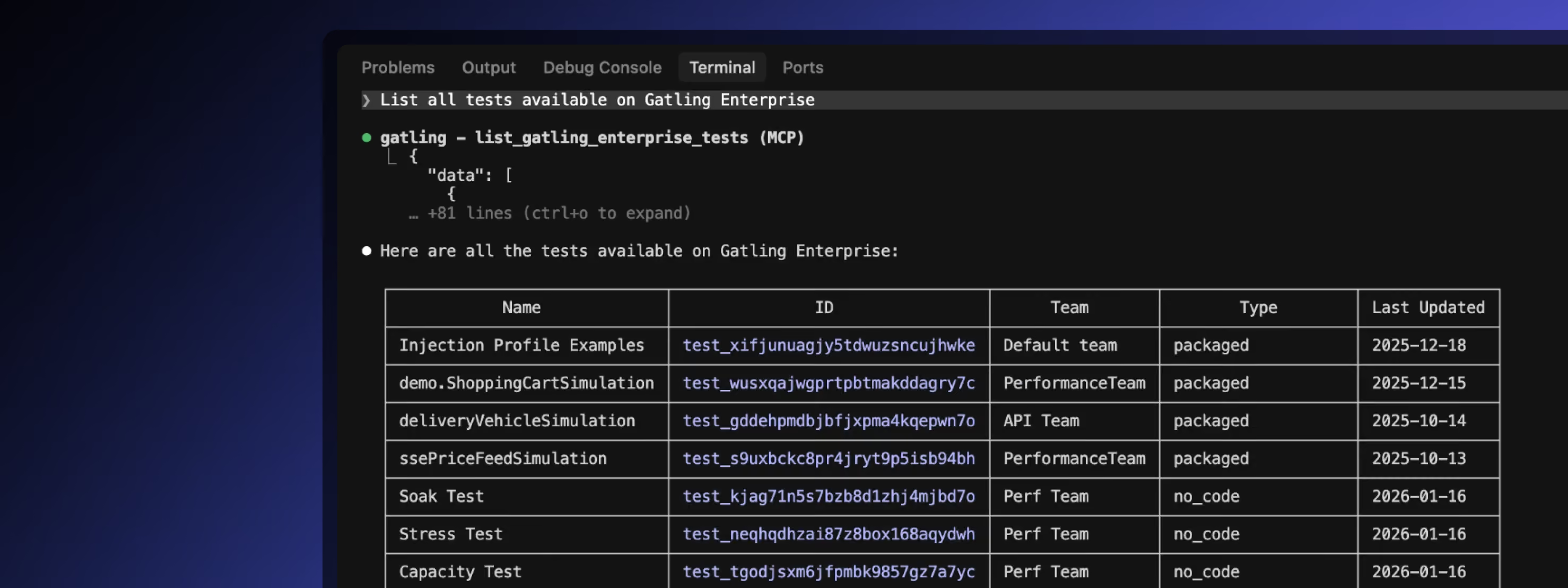
HTTP/S, WebSockets, SSE, gRPC, MQTT, JMS natively, plus Kafka, AMQP, and JDBC databases via plugins.

After the run: AI analysis, SLO compliance, trends, comparisons, and a campaign score that moves over time.
An engine that doesn't waste a single CPU cycle
A single machine caps out around 64,000 concurrent sockets per target. Gatling’s engine is built to use nearly all of them.