
GATLING FOR QUALITY ENGINEERS
Build confidence
in every release
Ensure speed, stability, and scalability across your applications. Gatling embeds performance testing into QA workflows so your teams can deliver quality at scale.


Designed for quality engineers

Reduce release risk
Catch performance regressions before they impact users or revenue.

Scale QA efficiently
Automate performance validation in your pipelines, without expanding headcount or slowing releases.

Give stakeholders visibility
Share clear dashboards and SLA-driven reports with engineering and business teams.
Built for modern QA workflows
Gatling provides everything QA teams need to implement comprehensive performance testing strategies
Flexible test creation for every skillset
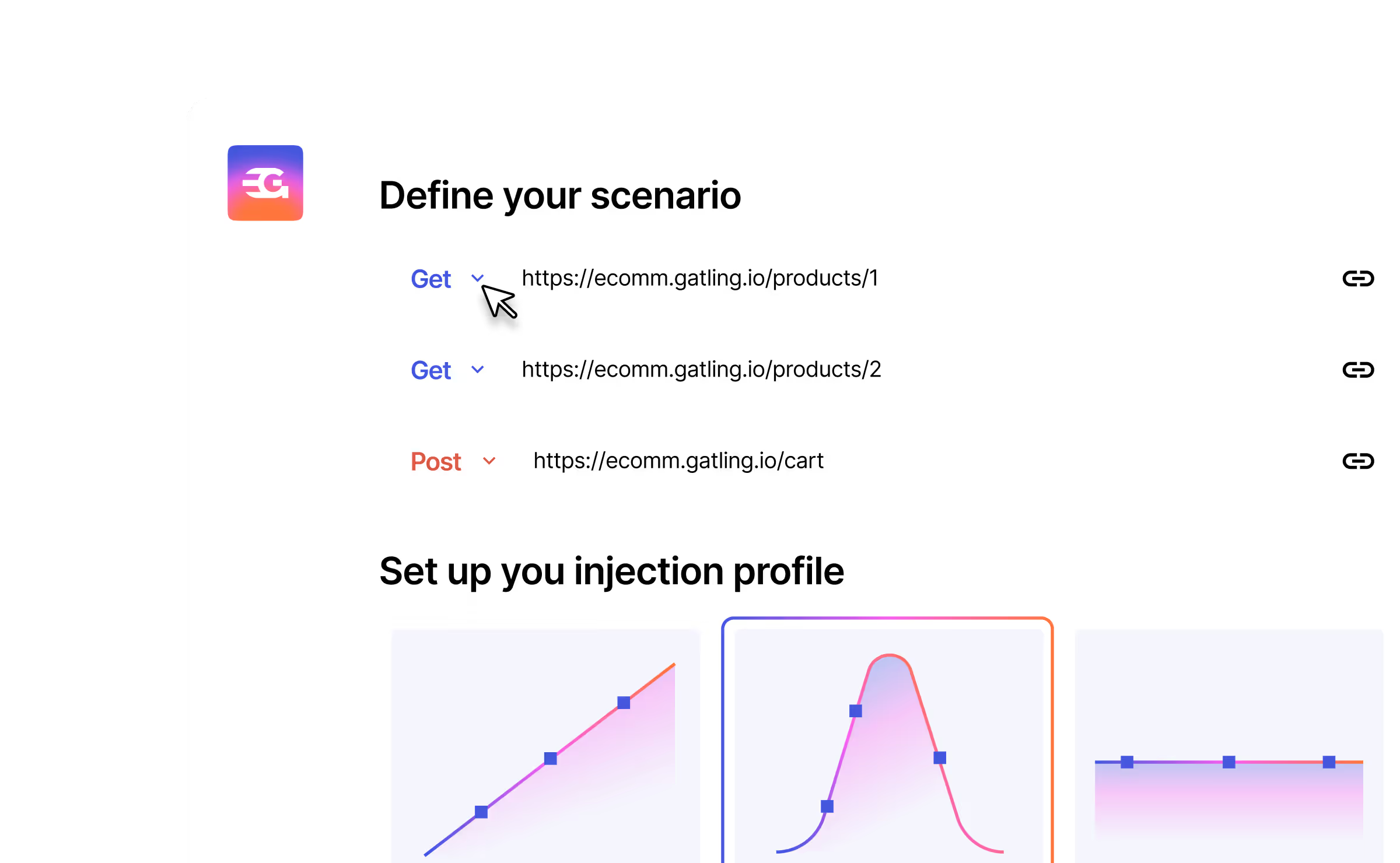
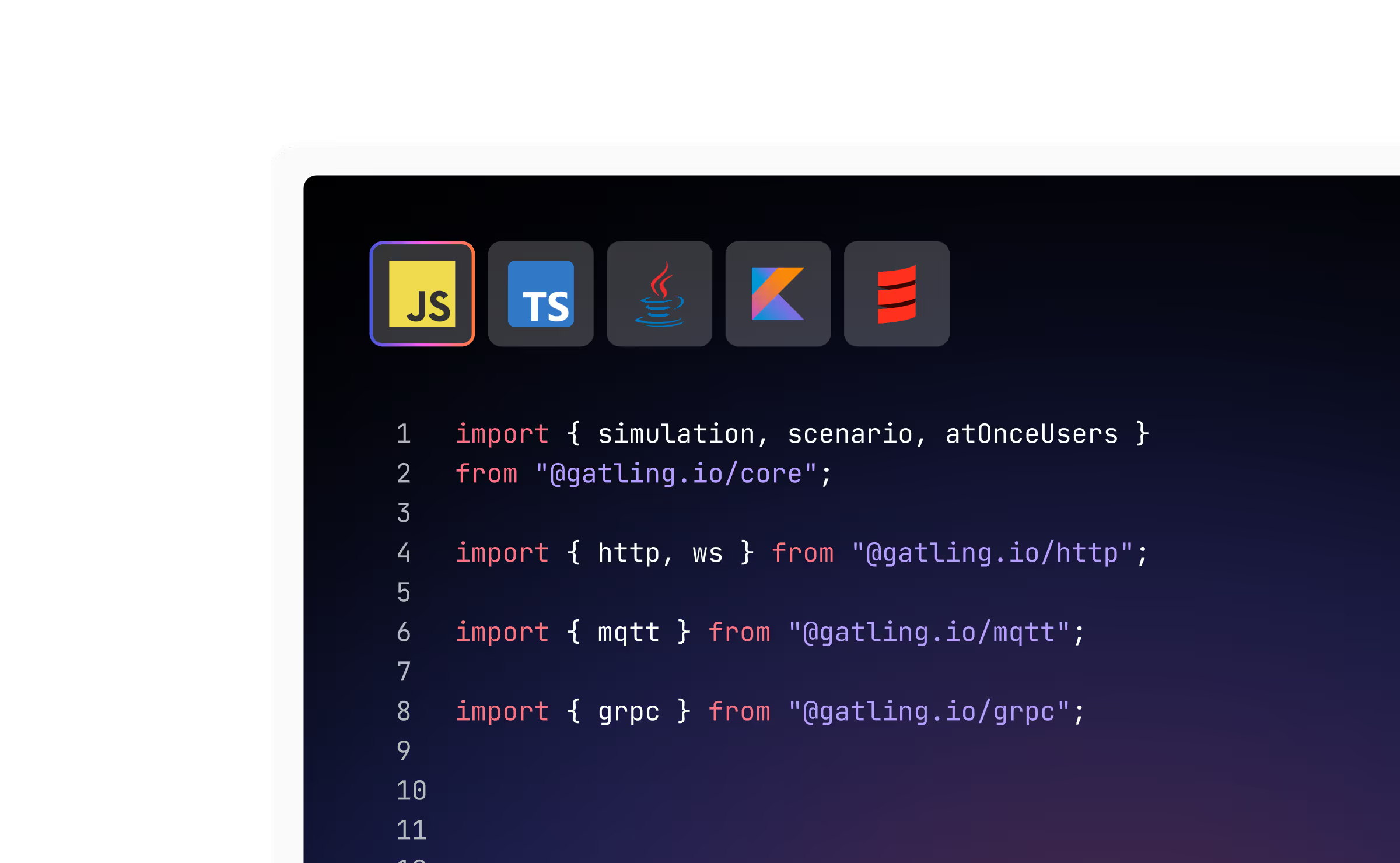
Start quickly with no-code builders or Postman imports, then scale to code-based testing in Java, JavaScript, or Scala. QA testers and developers can collaborate without friction.
Performance guardrails
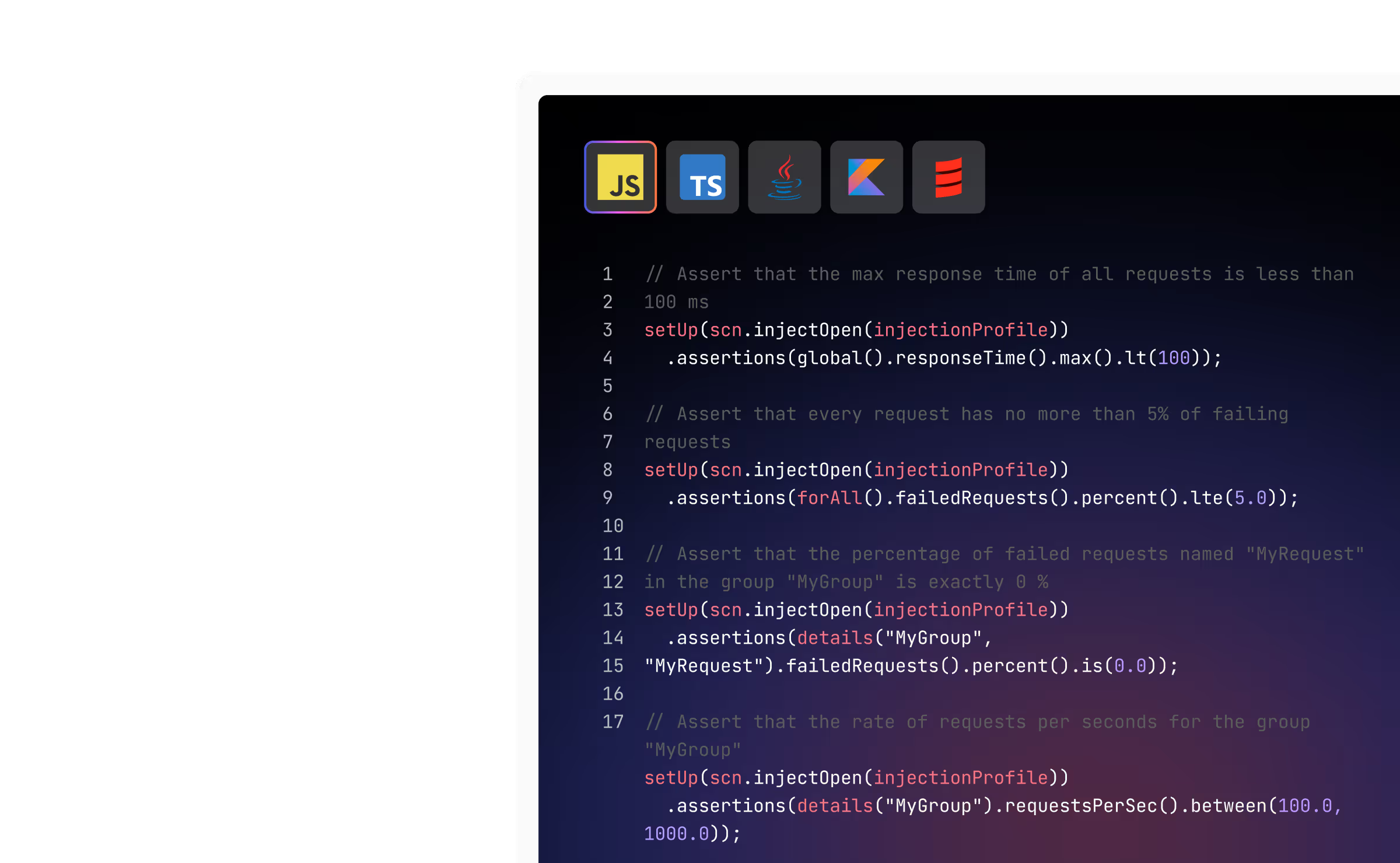
Define SLA thresholds for latency, throughput, or error rates and automatically block builds that don’t meet your requirements.
CI/CD integration
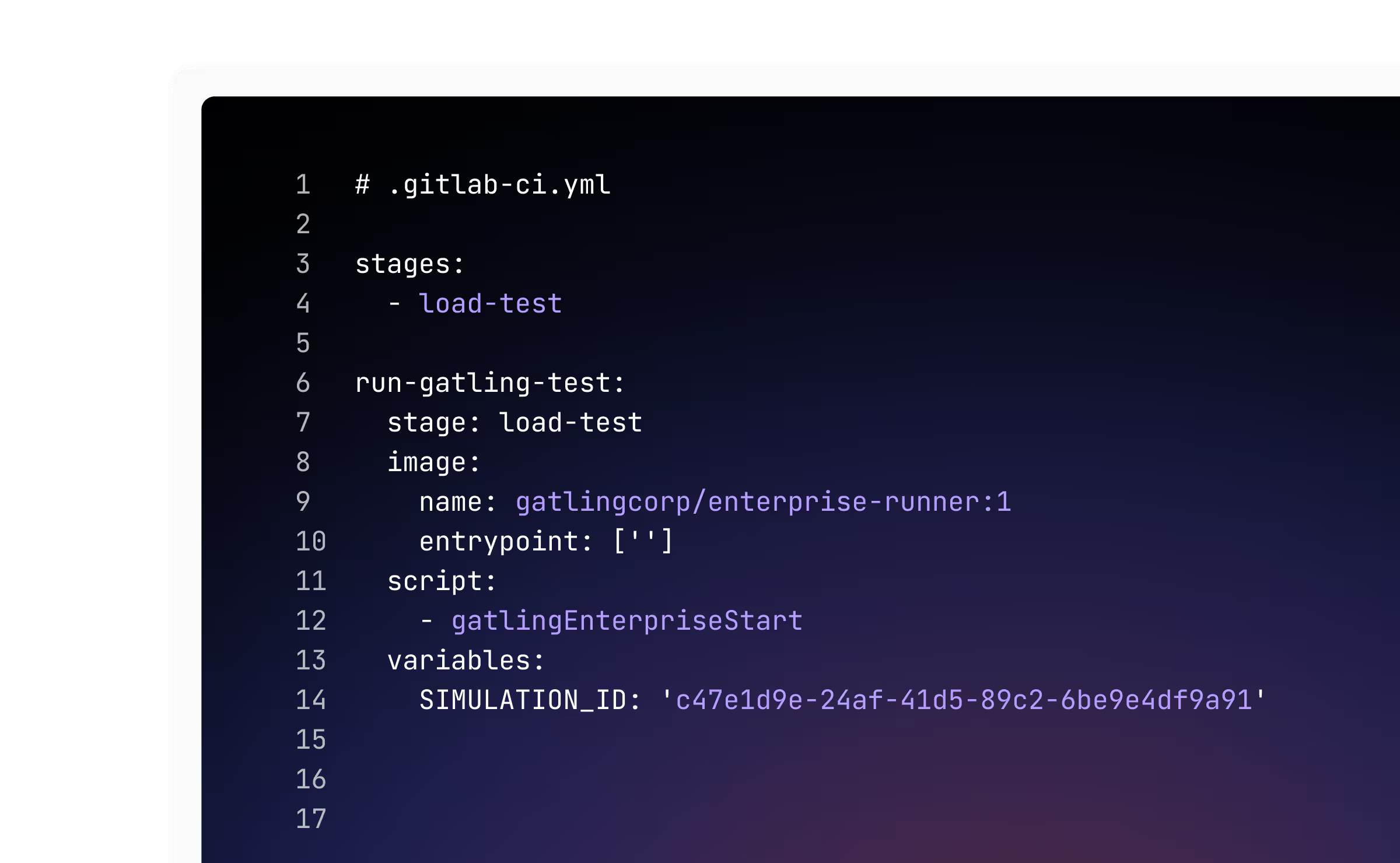
Seamlessly plug Gatling into GitHub Actions, Jenkins, GitLab CI, Azure DevOps and more to automate performance validation at every release.
Actionable analytics
Interactive dashboards and historical trends that QA leaders can share with dev, ops, and business stakeholders.

Protocol coverage
HTTP(S), WebSockets, gRPC, JMS, and more — ensuring QA can validate every part of the system under test.
"With Gatling Enterprise Edition, we can track our performance over time and allow our development teams to automate the scenarios and runs. Gatling enabled us to automate the performance impact assessment of new feature delivery continuously and before releases."
Simon Vos
Tui
Advanced quality engineering use cases
How QA teams use Gatling to ensure application performance and reliability.

API performance testing
Validate REST and gRPC APIs under load to ensure fast, reliable responses across services.
Regression prevention
Run automated performance tests on every release to detect degradations before production.
Pre-production validation
Stress-test staging environments to validate readiness before go-live.
End-to-end workflow testing
Simulate complete user journeys (logins, searches, purchases, or transactions) under peak load.
Microservices an distributed systems testing
Test service-to-service communication, queues, and asynchronous workflows in modern architectures.
Capacity planning & optimization
Measure system limits, right-size resources, and provide data-driven recommendations for cost-efficient scaling.
Built for every role
Our platform enables seamless collaboration across your organization. From coding test logic to making strategic decisions, every persona can contribute to delivering fast, reliable digital experiences.
Build and refine load tests directly in code, integrate into CI/CD, and debug performance issues early in the development cycle.
Heading
Design scenarios, run simulations, and validate SLOs with visual tools and automated checks, no coding required.
Heading
Model complex load patterns, analyze detailed metrics, and optimize systems for peak reliability at scale.
Heading
Coordinate cross-team testing efforts, manage infrastructure, and ensure performance strategy aligns with delivery goals.
Heading
Access clear, shareable reports and KPIs to track performance against business objectives and ensure smooth user experiences.
Heading
FAQ
Frequently asked questions (FAQs) about load testing for quality engineers
Load testing in quality engineering validates that applications function correctly under expected workloads by simulating real user traffic and measuring response times, throughput, and error rates to catch performance issues before production.
Quality testing engineers monitor all phases of software development to verify products meet requirements and standards by creating test plans, identifying bugs, validating fixes, and ensuring accuracy before launch.
Developers, QA engineers, and performance testers perform load testing using tools like Gatling to optimize application performance, scalability, and capacity throughout the development cycle and CI/CD pipelines.
Gatling automates performance validation in CI/CD pipelines with SLA-driven thresholds that catch regressions before they impact users, providing actionable dashboards and historical trends that teams can share across engineering and business stakeholders.
Make quality a continuous practice, not a last-minute checkpoint.
Simulate millions of users. Catch bottlenecks early. Scale your infrastructure with confidence.
Need technical references and tutorials?
Minimal features, for local use only
