
Get prepared for Black Friday with a load testing methodology that actually works
A clear, repeatable methodology for planning, designing, and automating your load tests, so the checkout, the payment gateway, and the failover path are proven before the sale goes live, not during it.
SESSION
How to plan high-scale load testing
In this session, Heather will run a real high-scale test against a real website, ramp to a massive number of virtual users, and show you how to trust your results when things get intense.



Our users generate massive traffic using Gatling





FINDING THE REAL BREAKING POINT
Traffic doesn't cause the failure. It finds the assumption that was never tested.
Six places Black Friday load concentrates, and what a test has to prove before the sale, not after.
Tape à l'œil found this pattern directly: a checkout flow that passed every normal load test still broke once thousands of pre-built carts were released at the exact same moment. The traffic wasn't the problem. The untested checkout logic was.
Gateway timeouts, fraud-service slowdown, connection exhaustion, duplicate orders after a retry. Retry after a timed-out call still produces exactly one order, every time.
Hot rows, lock contention, connection storms, replica lag under simultaneous reads and writes. Holds at production-like cardinality, not a 10% staging dataset.
Cold cache, mass TTL expiry, hot-SKU stampede, origin unable to survive a cache miss.
Origin stays under safe QPS when the cache goes cold mid-sale.
Scale-out reacts too slowly for the first wave; stateful tiers can't scale at all.
Warm-up before launch, not scale-out triggered by launch.
Payment, fraud, and identity vendors often have a lower rate limit than your own infra.
Circuit breaker opens before one slow vendor exhausts every worker.
A launch push notification turns thousands of clients into a synchronized API burst.
Real app request sequences, not a single-endpoint synthetic check.
THE TEST PORTFOLIO
Five tests, in order. Skipping the order is how teams miss the failure.
A stress test without a load-test baseline can't tell you whether the system broke at 500 users or was already broken at 100.

SMOKE TEST
Sanity check
2-5 virtual users.
Confirms the script, the data, and the environment are actually correct.

LOAD TEST
Forecast peak
Ramp to expected Black Friday volume plus a safety margin.
Sustained, not instantaneous.

spike test
08:00 launch
Sudden jump to 2-5x peak, then back down.
The riskiest ten minutes of the whole event.

STRESS TEST
Breaking point
Push past forecast until something gives.
Find out what fails first, and whether it fails contained.

SOAK TEST
Cyber Week
70-80% of peak for hours, not minutes.
Catches the memory leak a short test never sees.
FEATURE TOOLKIT
The features you need when everyone shows up to your website at the same time
Simulate the exact journey that breaks on Black Friday: thousands of pre-built carts checking out in the same ten minutes, payment gateways under load, traffic arriving from every region simultaneously.
Gatling's SDKs (Java, Scala, Kotlin, JavaScript, TypeScript) let you design, version, and customize every part of that test, and the MCP server can draft the first version straight from your repo. AI Run Comparison then flags any regression against last year's Black Friday baseline before it reaches production.

High-traffic checkout and payments
By combining Gatling’s code-based approach with powerful data feeders, parameterization, and correlation, you can simulate thousands of unique user journeys that reflect real-world variables such as promo codes, payment gateways (e.g., PayPal, Stripe), and third-party APIs.
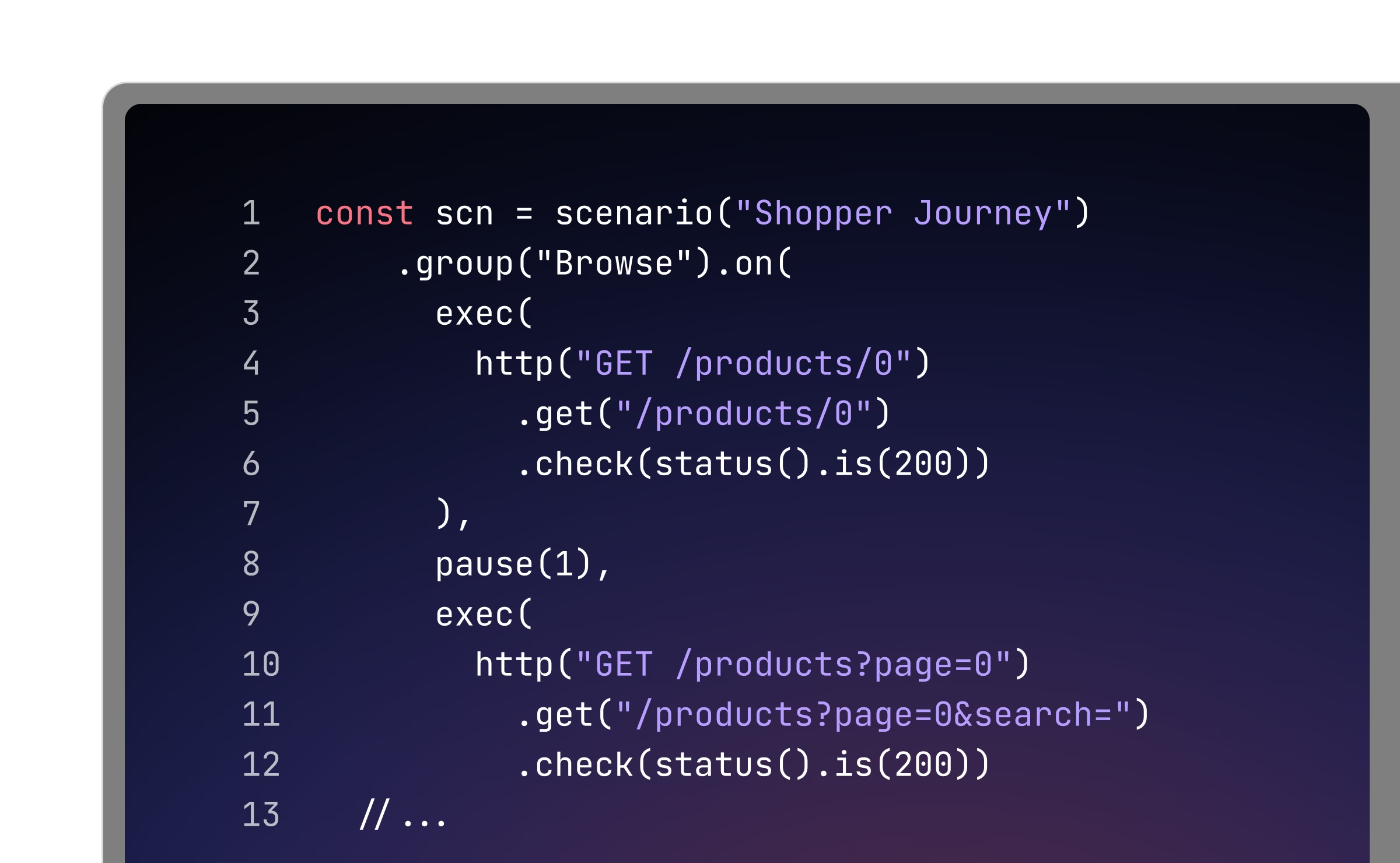
Protocol diversity
Whether your platform includes real-time stock updates over WebSockets or secure backend APIs, Gatling’s protocol-specific engines ensure accurate simulation of user interactions and system dependencies.
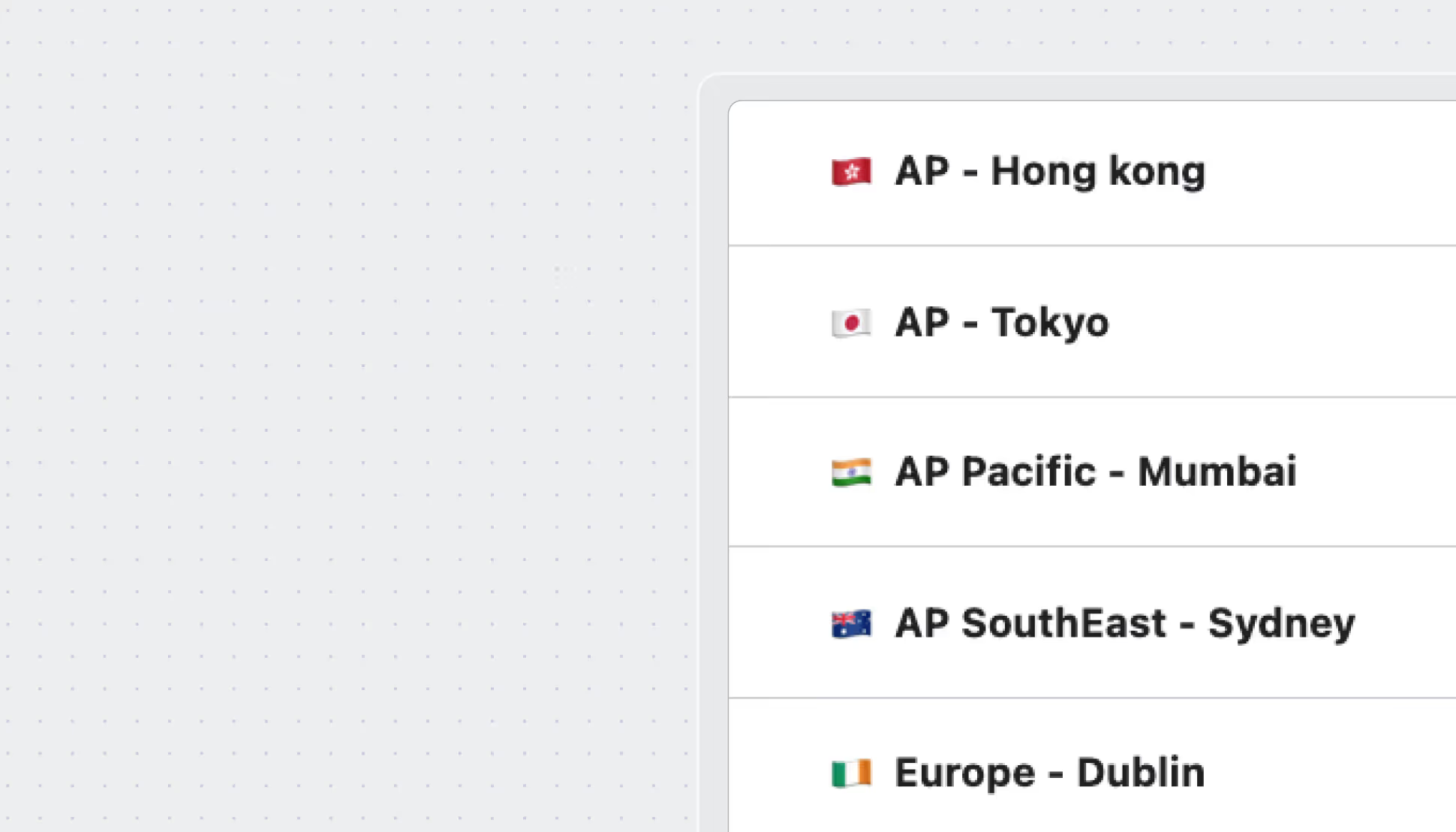
Global traffic generation
You can deploy distributed load generators across multiple geographic regions to replicate your customers’ actual locations and network conditions. This ensures that your tests reflect latency variations, regional traffic surges, and CDN behaviors.
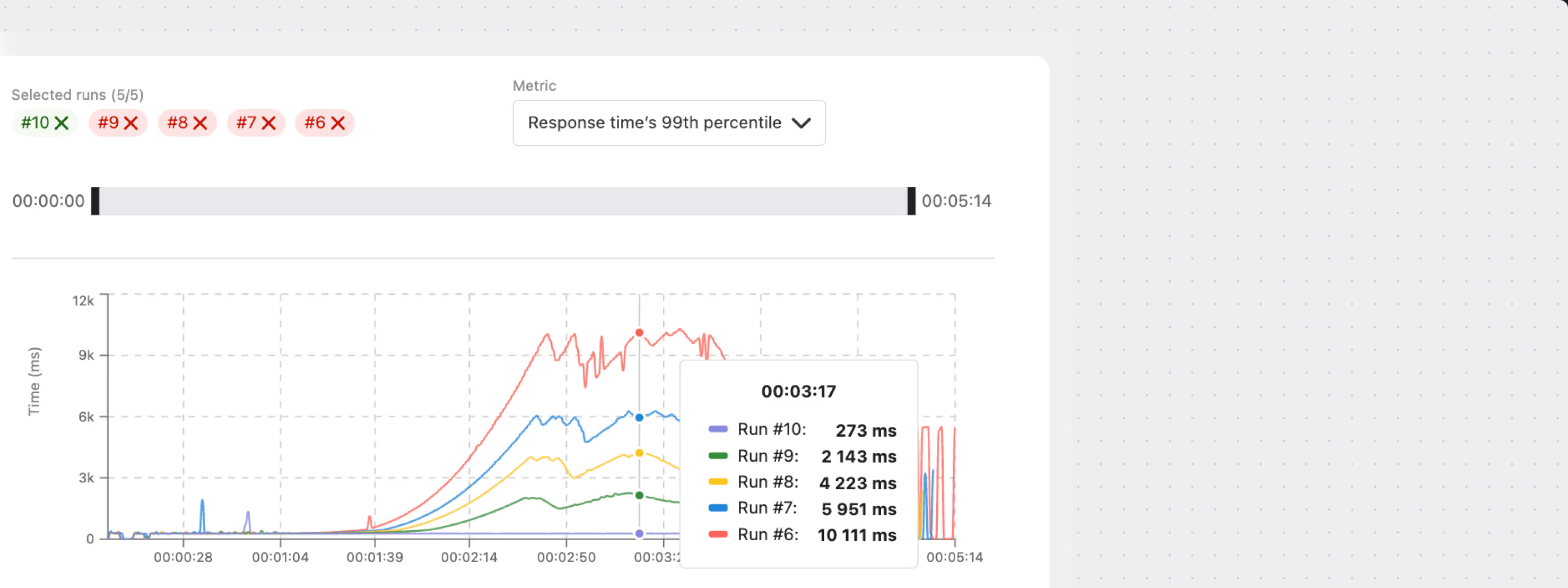
Multiple run comparison
Gatling provides built-in capabilities to compare test results across multiple runs, allowing you to track performance trends over time. Whether you are rolling out a new product collection, updating your checkout system, or scaling infrastructure, you can benchmark each iteration against previous runs.
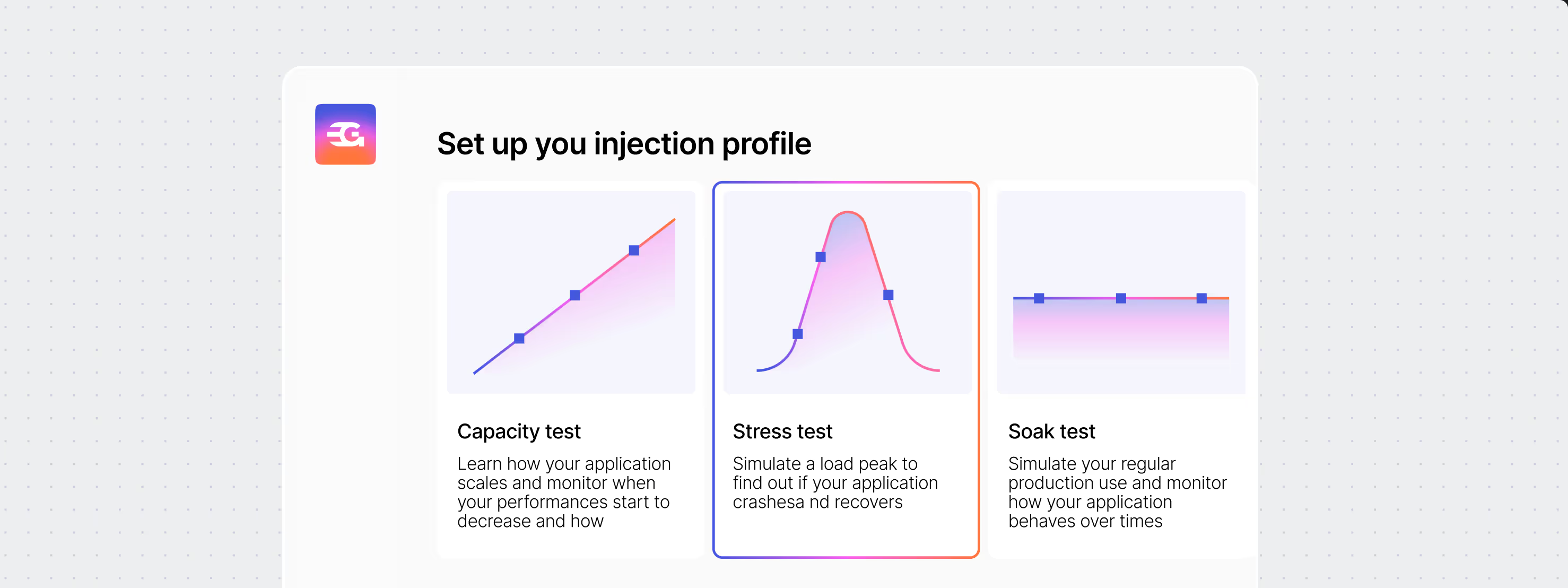
Custom traffic profiles
Retail traffic is rarely linear, and Gatling enables you to model it with precision. From gradual ramp-ups during early sales campaigns to sudden, high-intensity spikes during flash sales or product drops, Gatling’s flexible injection profiles allow you to script these patterns in detail. You can mix multiple user flows, control pacing, and even simulate “think times” or transaction delays to reproduce authentic customer behavior at scale.

Secret manager integration
Gatling integrates with enterprise-grade secret managers (e.g., AWS Secrets Manager, HashiCorp Vault) to securely store and inject API keys, payment credentials, and third-party service tokens into your load tests.

Build your Black Friday test before the sale goes live, not after.
Gatling thinks AI-first to simplify the developer workflow, from writing the flash-sale spike test to keeping it correct as checkout logic changes right up to launch week.
What we offer for scripting:
The result: your readiness test gets written in minutes, so the fix ships before 08:00 on the day, not after the sale's already lost.




- ✓ Registered source repository: github.com/acme/checkout-service
- ✓ Created build-from-sources test: "Checkout Load Test"
- ✓ Started run from Paris location
TEAMS THAT SUCCEEDED DURING HIGH SCALE LOAD EVENTS
Four teams, four kinds of seasonal peak, the same discipline.
Retail Black Friday, marketing infrastructure during BFCM send volume, and an EdTech platform's Back-to-School surge.
Different calendars, same failure shape.

“When you’re sending billions of messages, you can’t afford uncertainty. We prepare our backend services for Black Friday and Cyber Monday with realistic, high-scale load tests.”
Bian Jiang
Principal Engineer, Developer Experience
.png)
“Gatling has become an integral part of our CI/CD pipeline. We run daily load tests, ensuring every change is stress-tested before it reaches production.”
Thomas Onken,
Software Developer

"With Gatling, everything is visible in the form of code. So that has really helped us, The team uses Java with the Gatling Java SDK, which aligns well with internal engineering skills and makes script maintenance easier over time, especially during Back-to-School campaigns"
Muzzamil Sheikh
Staff Performance Engineer
.png)
“This year we rewrote our simulations in JavaScript so the whole team could really take ownership. It’s the most accessible language for our developers; and in e-commerce, we use it every day.”
Loïc Chero
IT Lead
Ready to handle
peak traffic?
Don't let performance issues cost you revenue during your busiest shopping periods.
FAQ
Frequently asked questions (FAQs) about Black Friday load testing
Load testing validates system behavior under expected peak traffic, stress testing pushes beyond expected limits to find breaking points, soak testing runs sustained load for hours to catch degradation over time, and spike testing simulates sudden traffic surges from campaigns or viral products.
No, Black Friday testing focuses on revenue-critical journeys like search, add to cart, checkout, and payment authorization rather than just homepage load, because these flows directly affect whether customers can complete purchases during high traffic.
Gatling executes scripts but cannot validate whether SKUs are published, stock levels are realistic, or pricing rules match production behavior—outdated or generic test data causes false failures that waste time during critical preparation periods.
Performance testing works best as part of regular development cycles rather than one week before the event, because late testing turns every finding into an urgent fix with no time to validate improvements or retest after changes.
Our aggregation model processes metrics asynchronously, with zero blocking or manual correlation. This allows real-time dashboards, deep insights, and horizontal scalability across distributed load generators.