
Load testing for financial services
Reducing production risk in financial services
Most production incidents don't come from missing features or obvious bugs. They come from performance behavior nobody saw: traffic no one modeled, limits no one measured, failure modes no one checked.
A guide for CIOs, CTOs, and compliance leaders in banking, capital markets, insurance, and fintech on how to turn load testing into a way to reduce production risk.
No spam. Just the comparison, straight to your inbox.


Worldwide community of 300,000 companies and millions of users





Most teams do load testing. Few use it to reduce risk
When an API degrades, the damage spreads fast: latency propagates, retries pile on more load, queues back up, and the user experience falls apart upstream.
Reducing performance risk isn't about testing everything or hitting perfect numbers. It's about cutting uncertainty where a failure would cost you the most.
For APIs, that uncertainty tends to fall into four buckets. A risk-based strategy covers all four on purpose, not by accident.
Coverage risk
The critical APIs or scenarios weren't tested
Reality risk
Tests didn't match real traffic or environments
Interpretation risk
Results existed, but no one knew what to decide
Ownership risk
No one was accountable for acting on the signal
WHERE TO FOCUS
Coverage risk
Test the APIs that matter most
In financial services, the system handling money can't afford to fail. But most performance risks are invisible until peak. 95% API-driven architecture. Sub-100ms industry benchmark. Foreseeable spikes that aren't being tested for.
Payment authorization
A failure blocks revenue and triggers compensation obligations. Test before every release and before peak periods.
Core banking and fraud scoring
Blocked customer access, reconciliation failures, and latency that stalls the whole payment path. Test before releases and weekly.
Settlement and open banking
A missed window means compensation exposure and DORA/PSD2 reporting. Test before month-end and partner onboarding.
WHERE TO FOCUS
Reality risk
Make tests that look like production
Month-end spikes, disbursement surges, latency cascades, retry storms. None are surprises.
They hit production because the tests that ran first looked nothing like it.
Don't ramp smoothly. Use bursts, plateaus, retries, and mixed concurrency.
Don't call services directly. Route through gateways, auth, and fraud engines.
Drop the toy datasets and warm caches. Use production-volume data so cache misses surface.
WHERE TO FOCUS
Interpretation risk
Decide what results mean in advance
A tested flow that fails in production carries the same exposure as one nobody tested.
If no one's defined what a result means or what it triggers, the test is just a compliance artifact.
Someone owns the call
A named person or team decides ship or hold, and is accountable for it.
It answers something
The test maps to a specific risk it's meant to reduce, not just a number on a dashboard.
Thresholds set up front
Pass and fail both have a documented action agreed before the run, not debated after.
WHERE TO FOCUS
Ownership risk
Make performance everyone's job
Performance risk can't sit with one team. When a flow degrades 40% and nobody's sure who owns the result, that gap between spotting it and acting is where incidents happen. Pick a model that fits.
Developer-led
Devs own scenarios alongside the code. Tech leads run smoke and regression. Risk & compliance sign off on critical flows.
QA / performance champion
QA owns the test architecture, devs supply scenarios, and product leads make the release call.
SRE maintains the architecture and profiles, leadership sets guardrails, and compliance governs the evidence.
Get this right, and testing becomes Continuous Performance Intelligence
Failures before customers
Surface the failures that hit under predictable load before your customers or regulator find them first.
Heading
SLO evidence on every run
Every run returns a compliance score, a real percentage both engineering and compliance can sign off on.
Heading
A running evidence trail
Build a continuous record, so when a regulator or board asks, you already have the answer.
Heading
A rhythm built for financial services
Tie testing to business events and what's actually changing, not just the release calendar.
Each integration milestone is a point where untested behavior under load can silently undermine your performance.
A new API wrapper, a cloud-native component running alongside legacy infrastructure, a newly supported payment method, they can all disrupt things.
Daily
Smoke tests on payment authorization and authentication flows (CI / PR).
Weekly
Tests didn't match real traffic or environments
Per release
Ramp–Hold against SLOs on critical payment and settlement journeys.
Before peaks
No one was accountable for acting on the signal
PERFORMANCE PLATFORM
Reduce risk with Gatling,
Welcome to Continuous Performance Intelligence.

AI capabilities
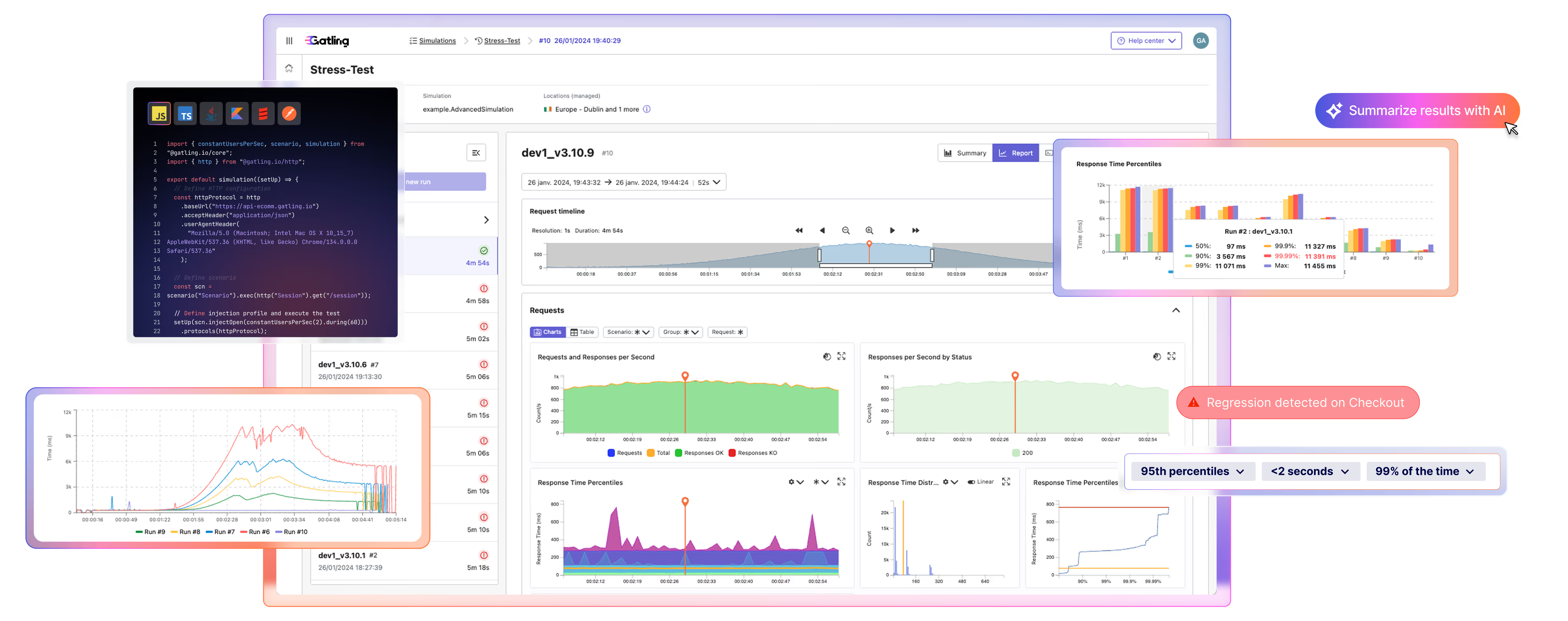
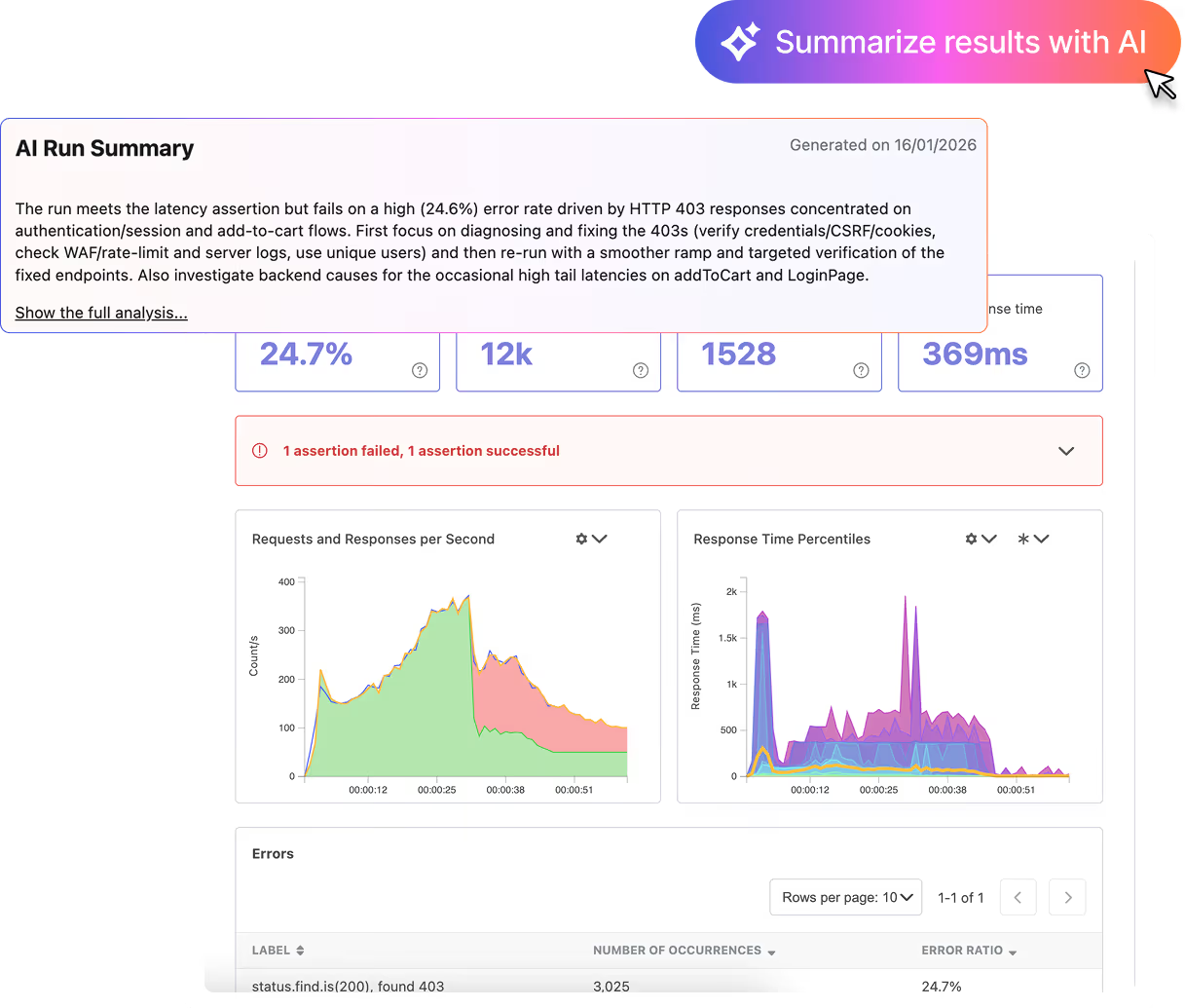
Automated run summaries surface what went wrong without manual analysis. IDE integration and MCP server support bring load testing into the workflows your engineers already use.
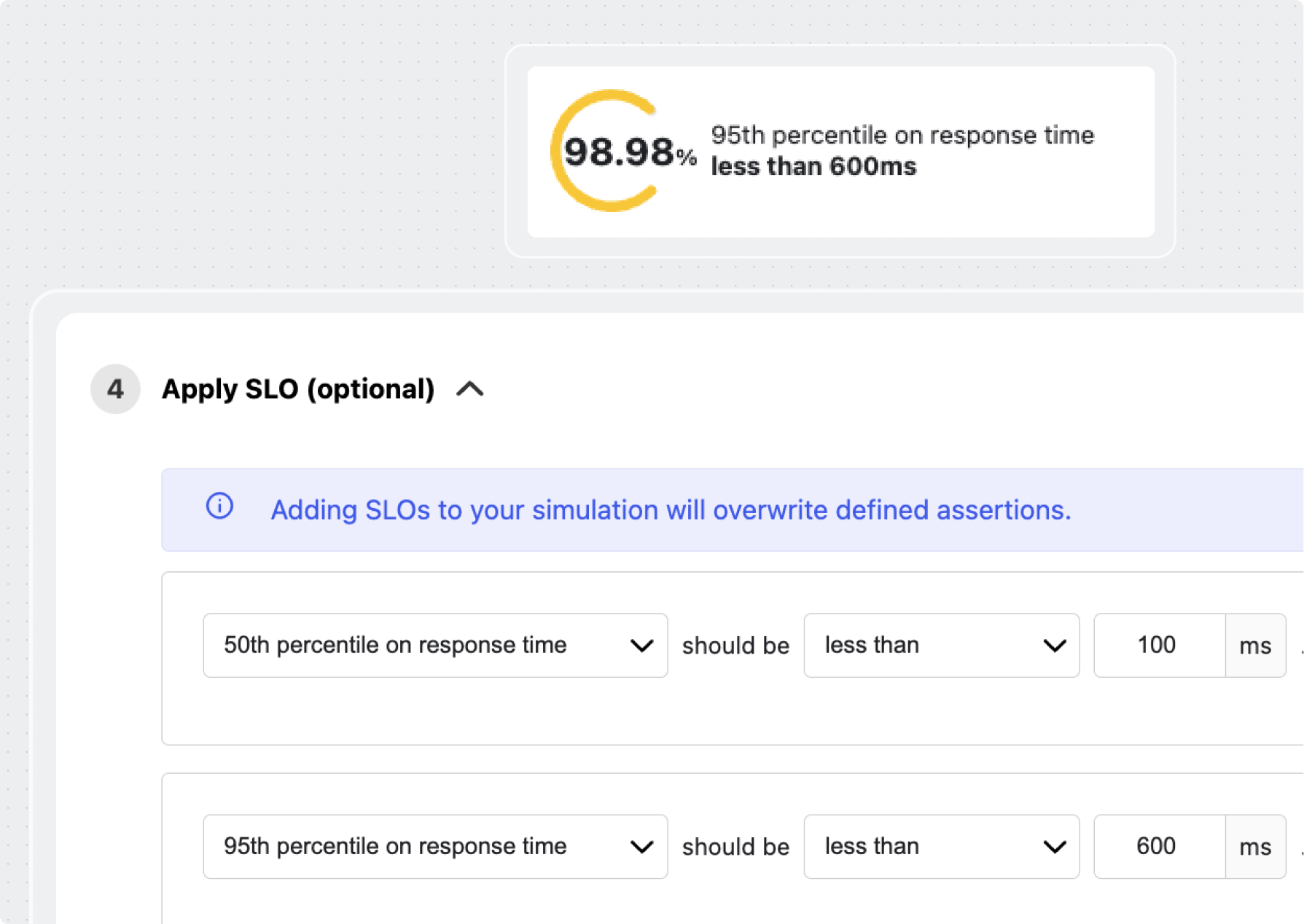
SLOs and compliance scoring
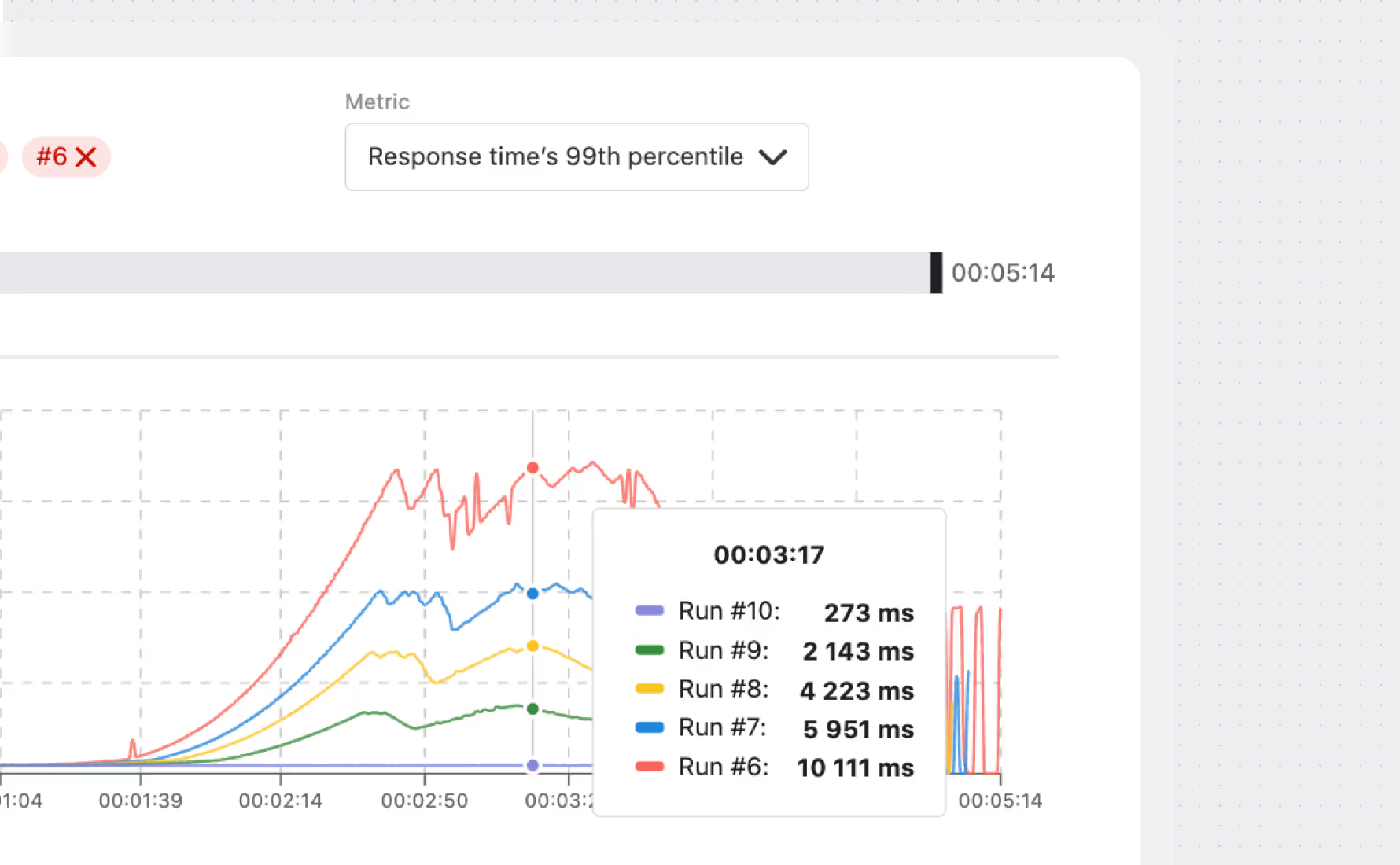
Define response time and error rate targets directly in Gatling Enterprise Edition. Every run returns a compliance score, not a pass/fail, a precise percentage. Know exactly how long your system held the line.

Test as code
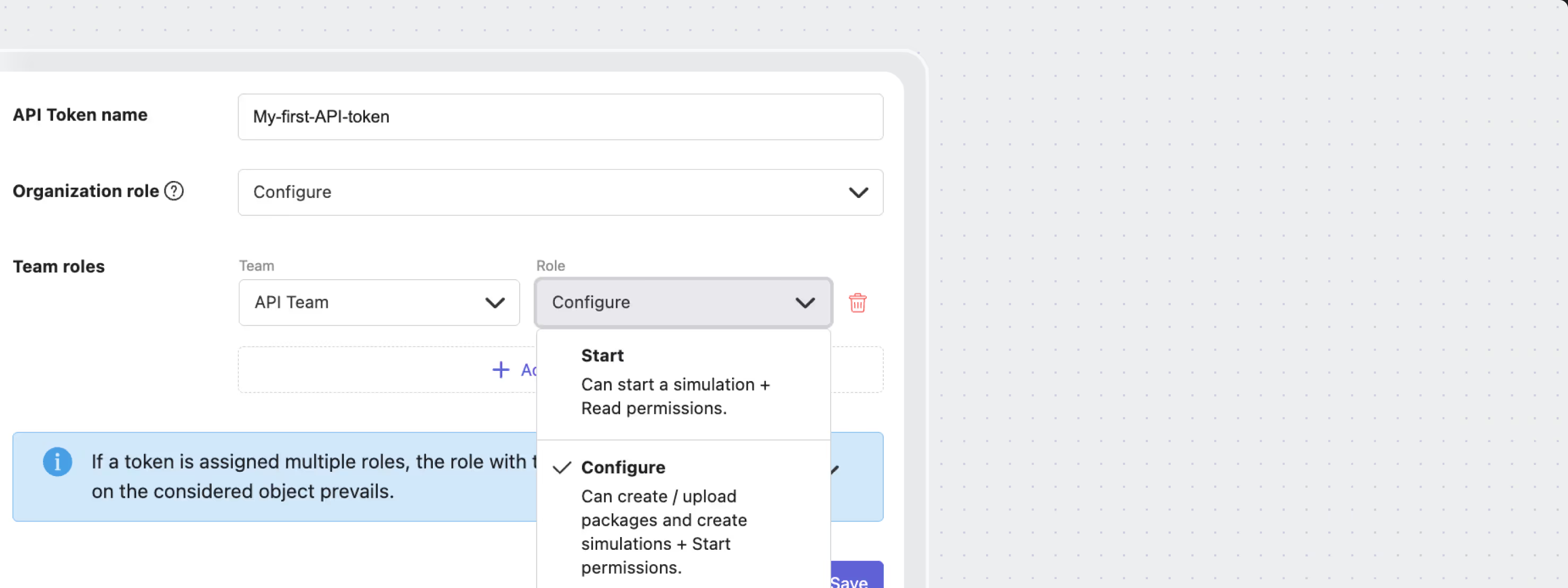
SSO, secrets management, private test packages, and full audit trails for compliance.
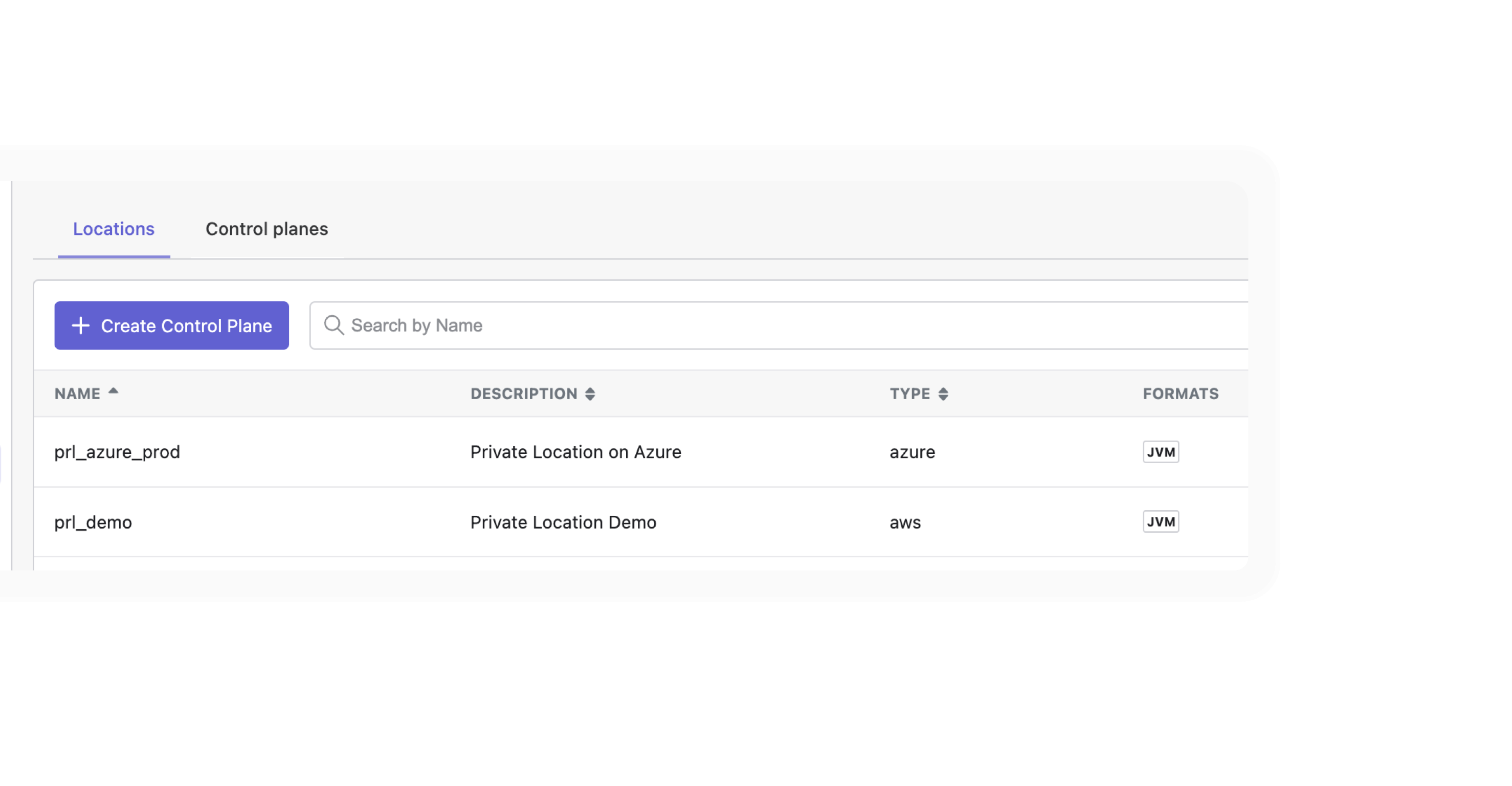
Private locations
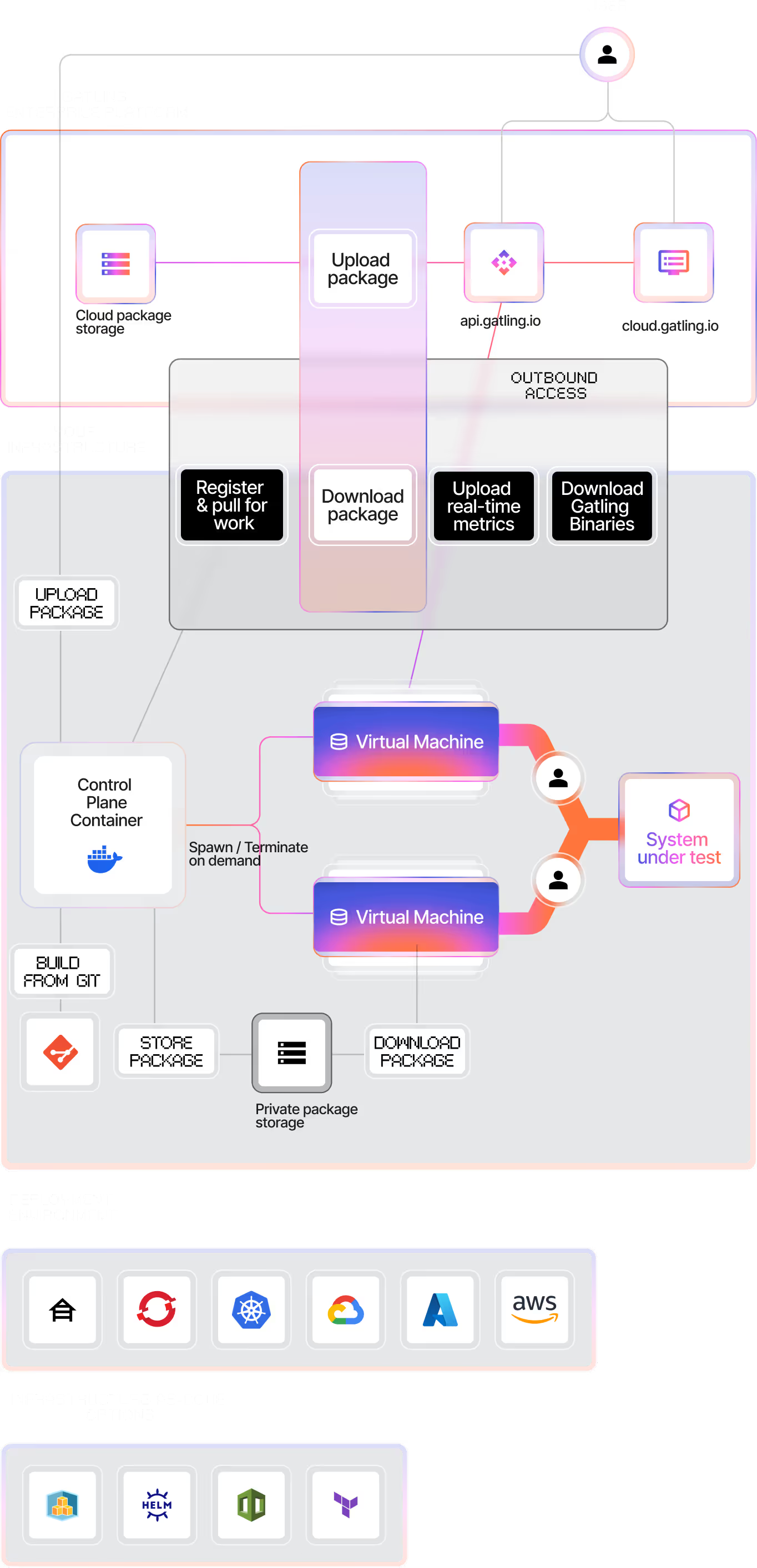
Load generation runs inside your network perimeter. No traffic leaves, no firewall exceptions. Test what's actually in production.

HOW gatling works
From a periodic activity to a continuous discipline
The same SLOs your dashboards already enforce become automated gates in your delivery pipeline.
A payment flow that exceeds your p95 latency threshold fails the build before it reaches the environment your monitoring is watching.
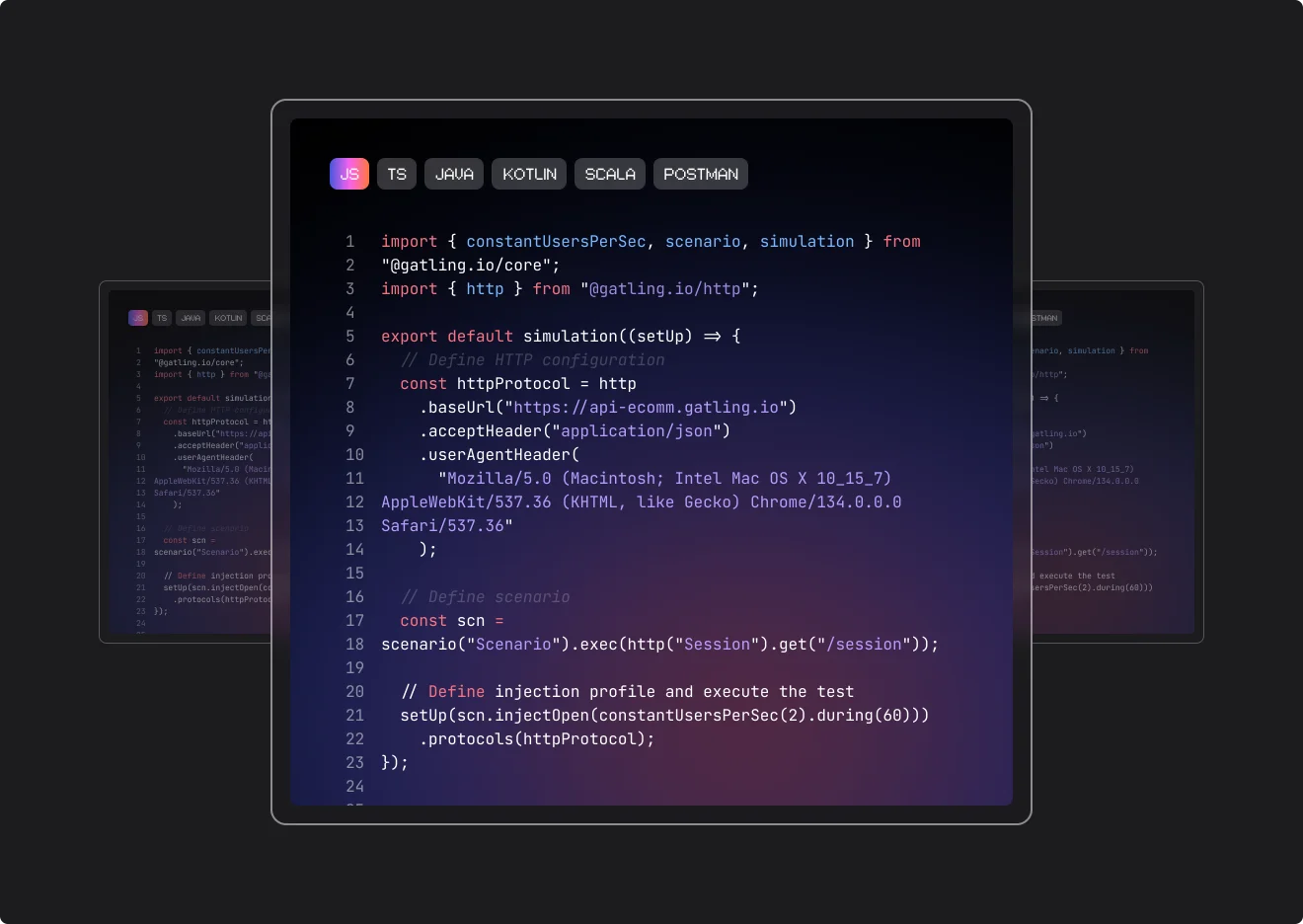
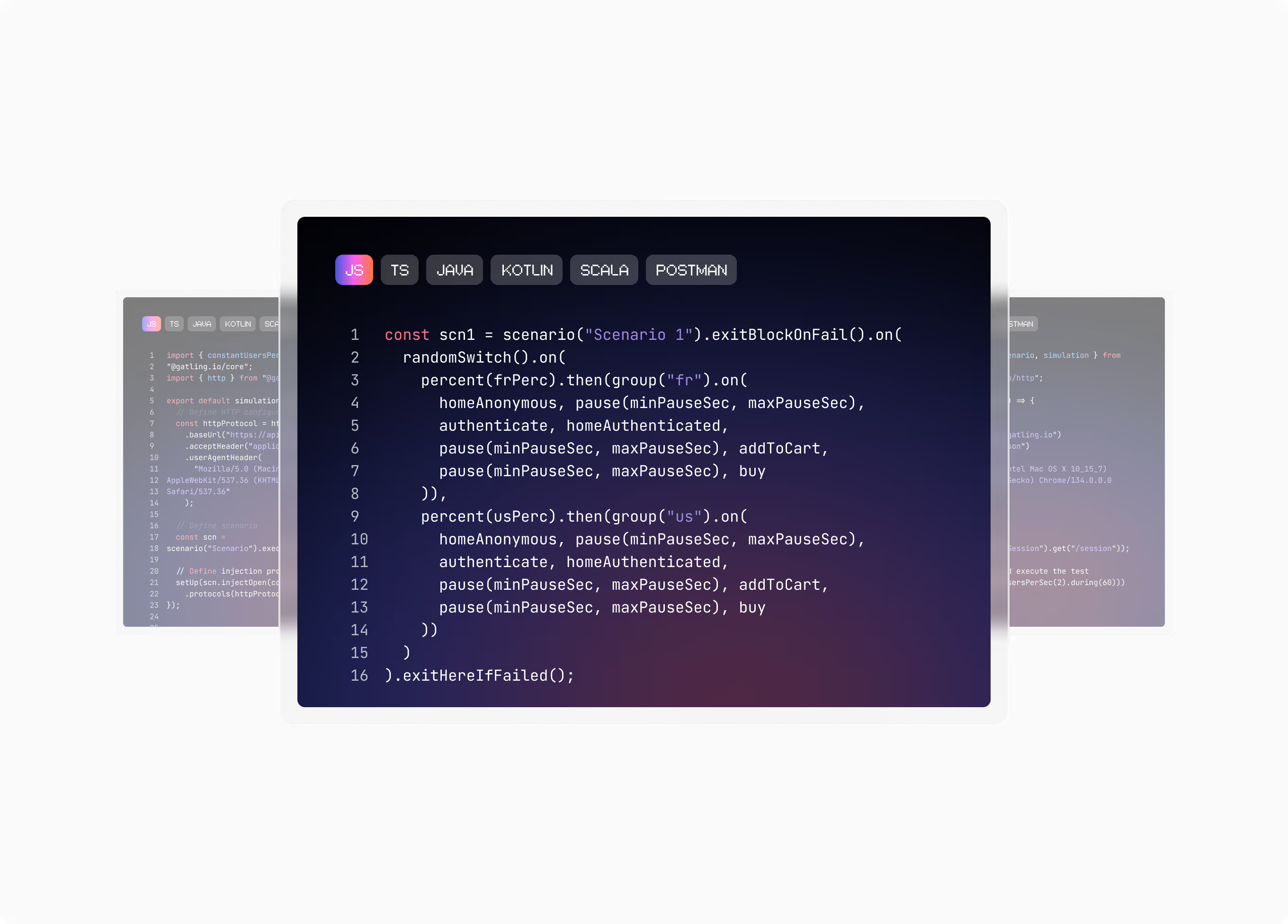
Test as code
Write scenarios in Java, JavaScript, or Scala. Versioned, reviewed, and living alongside your application in CI/CD.
Private load generation
Load runs inside your network perimeter. No traffic leaves, no firewall exceptions. Tests what's actually in production — including VPC-bound payment systems.
SLO compliance scoring
Every run returns a precise compliance percentage — not a pass/fail. Know exactly how long your system held the line.
AI-assisted analysis
Automated run summaries surface what went wrong without manual triage. IDE and MCP integration brings testing into existing workflows.
Maturity framework
Where does your organization stand?
Most financial institutions fall into one of these stages.
The gap between reactive and continuous is where most of the risk lives.
Our aggregation model processes metrics asynchronously, with zero blocking or manual correlation. This allows real-time dashboards, deep insights, and horizontal scalability across distributed load generators.
Load tests run before major releases. Tests are manual, point-in-time, and often disconnected from production SLOs.
Performance tests run in CI/CD pipelines. SLO thresholds are defined and automated. Results are reviewed as part of the release process.
Our aggregation model processes metrics asynchronously, with zero blocking or manual correlation. This allows real-time dashboards, deep insights, and horizontal scalability across distributed load generators.
Performance incidents are not inevitable
They're the result of questions nobody answered about capacity, behavior, and failure. A structured program answers them before production does. Grab the whitepaper, or talk to us about Enterprise Edition.
Need technical references and tutorials?
Minimal features, for local use only
