
Load testing for financial services
Performance failures in financial services are a business crisis, not a technical one
Banks, trading firms, and insurers are managing billions in transaction risk with systems that have never been tested at real production volumes.
We'll show you what's at stake and how load testing can change that.


Worldwide community of 300,000 companies and millions of users





Are you managing performance risk or accepting it?
Most performance failures aren't visible until they happen.
They surface as a reconciliation window missed at month-end, a payment timing out during peak retail, or a migration that passed every pre-launch check, then degraded under real transaction volume.
Monitoring catches what slipped through. Performance testing makes sure less slips through in the first place.
$1.15B direct losses from a single unvalidated software change — July 2024
60% surge in API downtime incidents in financial services, Q1 2024–2025
84% of anomalies originate from inter-service interactions, not isolated componentss
$100M annual value of a 1ms latency advantage in high-frequency trading
USE CASE
Banking and payments
When the system
handling money fails
In financial services, the system handling money can't afford to fail. But most performance risks are invisible until peak. 95% API-driven architecture. Sub-100ms industry benchmark. Foreseeable spikes that aren't being tested for.
What can go wrong
The risk: Delayed settlements. Failed authorizations at peak. Reconciliation windows missed, cascading into regulatory reporting failures.
Customer trust that takes years to rebuild
in an industry where switching providers takes minutes.
60% Surge in API downtime incidents in financial services — Q1 2024 to Q1 2025
145-210% Latency increase in payment APIs during month-end processing
84% Of anomalies originate from inter-service interactions, not isolated componentss
The risk journey
of a single transaction
One payment authorization. Four external dependencies. A 100ms window.
Auth & session validation
Risk: Session timeout under concurrent load
Payment registration service
Risk: Passes unit tests in isolation, chokes when the reconciliation pipeline competes for DB connections
External API call
Risk: Third-party latency spikes cascade inward. Your SLA, not theirs
Currency conversion
Risk: Rate-fetch failures cause silent transaction drops at peak volume
Authorization & settlement
Risk: Timeout cascades from upstream failures compound here
Settlement & ledger close
Risk: Month-end window missed → regulatory reporting failure
With Gatling,
test beyond payment authorization
Simulate month-end and end-of-day volumes on settlement services. Confirm the window closes on time before regulators are involved.
Heading
Model realistic failure modes for external APIs (FX rates, card networks, KYC providers) and test how your system degrades when they slow down or fail.
Heading
Test account creation, deposit processing, and ledger calls under realistic concurrency. Isolate which microservice degrades first.
Heading
USE CASE
CAPITAL MARKETS
When milliseconds are worth millions
In high-frequency trading, a 1 millisecond latency advantage can be worth $100 million annually to a major brokerage. Uptime requirements push to five nines (99.999%). Every second of downtime during market hours can cost dearly.
What can go wrong
The risk: A performance gap in capital markets is not simply downtime.
It means competitive position lost in milliseconds, reporting windows missed, and regulatory exposure that compounds with every hour the system isn’t fully operational.
$100M annual value of a 1ms latency advantage for a major brokerage
99.999%uptime required in trading environments
LESS CONFIDENCE in the financial system
The risk journey
of a single trade
One click to buy. Multiple systems in motion.A few milliseconds to get it right.
Order submission from web, mobile, or internal desk
Risk: Session validation, stale state, or request bursts delay the trade
Order creation and routing logic
Risk: Looks stable in isolation, then slows down when market data updates, position checks, and downstream routing all hit at once
Pre-trade controls and policy validation
Risk: Latency here holds up the trade. Under load, every slowdown can push orders outside acceptable windows
Price lookup and quote validation
Risk: Delayed or missing market data leads to stale pricing, rejected orders, or trades executed on outdated assumptions
Exchange, ECN, or external liquidity provider
Risk: Third-party slowdowns and timeout cascades show up as your failure, not theirs
Trade confirmation, booking, reconciliation, and ledger updates
Risk: The trade executes, but downstream systems fall behind.
With Gatling,
test beyond trading day
Simulate market open, volatility spikes, and event-driven surges, and order routing systems. Make sure orders are accepted, priced, and routed fast enough when volume rises all at once.
Heading
Heading
Model realistic failure modes for external APIs (FX rates, card networks, KYC providers) and test how your system degrades when they slow down or fail.
Heading
Model slowdowns and failures across market data feeds, exchanges, clearing partners, payment rails, and KYC providers.
USE CASE
INSURANCE
When legacy systems are a ticking clock
Each integration milestone is a point where untested behavior under load can silently undermine the migration's business case. A new API wrapper, a cloud-native component running alongside legacy infrastructure, a newly supported payment method, they can all disrupt things.
What can go wrong
The risk: You’ve invested in dashboards that tell you when things break.
Without performance testing embedded in your delivery process, you’re missing the window to find out before they do, when you can still do something about it.
6% of insurance companies still run mainframe architecture averaging 25-30 years old
39% of insurers say legacy technology is actively blocking innovation
120K+ records harvested from GEICO and Travelers via credential stuffing
The risk journey
of insurance modernization
Legacy systems, cloud migration, and untested load.Silent performance risk at every integration point.
Legacy core 25 to 30 year old policy, billing, or claims platform
Risk: Stable under known conditions, but brittle under new concurrency patterns.
New integration layer around the legacy core
Risk: Adds a new load surface.
What worked as batch traffic now becomes real-time demand.
Modern services running alongside legacy
Risk: They scale differently, fail differently in ways teams often don’t test until production
Modern billing, payouts, and partner payment flows
Risk: Every new provider, payment rail, or workflow adds another dependency that can fail silently
Data and transactions moving between old and new stacks
Risk: The handoff points become the weak points
Renewals, claims spikes, billing runs, or reporting windows
Risk: Untested behavior under load can fail turning migration progress into operational risk
With Gatling,
test beyond peak policy events
Simulate quote spikes, catastrophe-driven claims volumes, renewal peaks, and partner-driven traffic across policy, billing, and claims systems.
Heading
Test end-of-day, month-end, and renewal-cycle workloads under realistic conditions. Confirm invoicing, policy updates, claims processing, and reporting workflows complete on time
Heading
Model slowdowns and failures across payment providers, identity verification services, data sources, and document generation platforms.
PERFORMANCE PLATFORM
Reduce risk with Gatling,
Welcome to Continuous Performance Intelligence.

AI capabilities
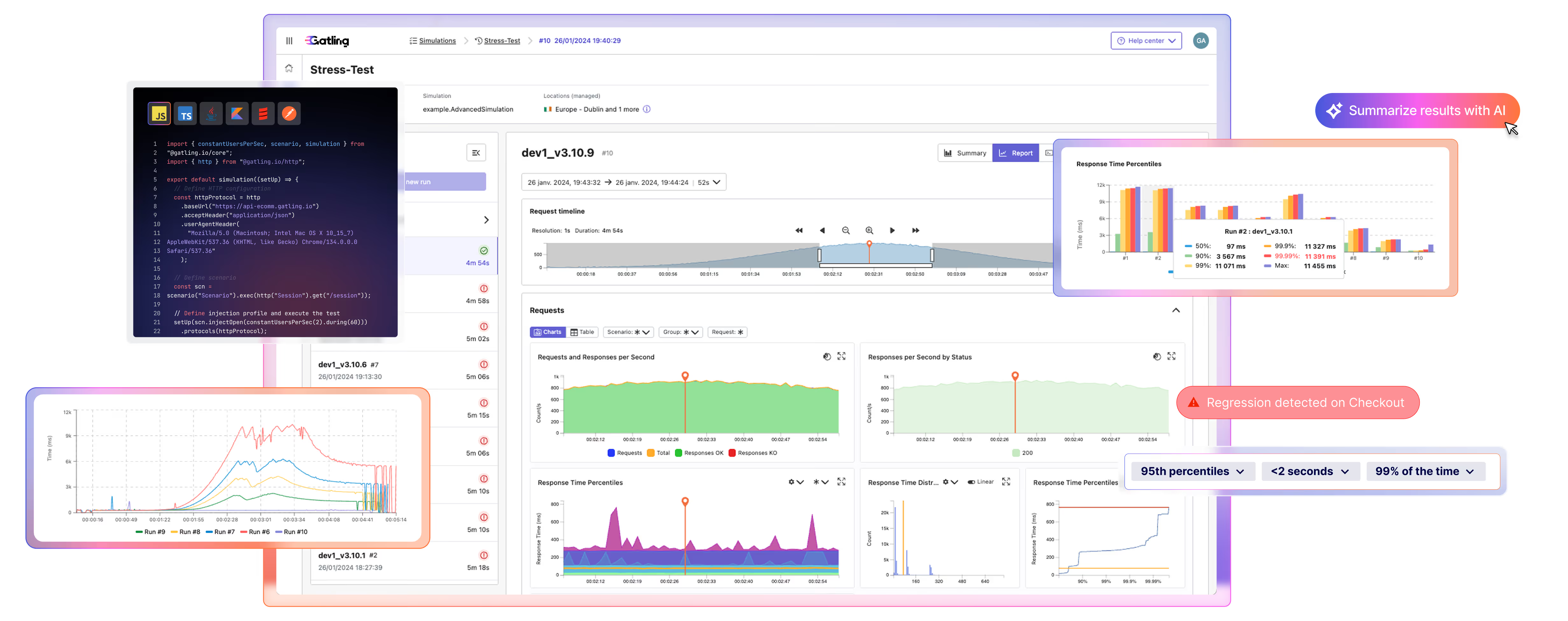
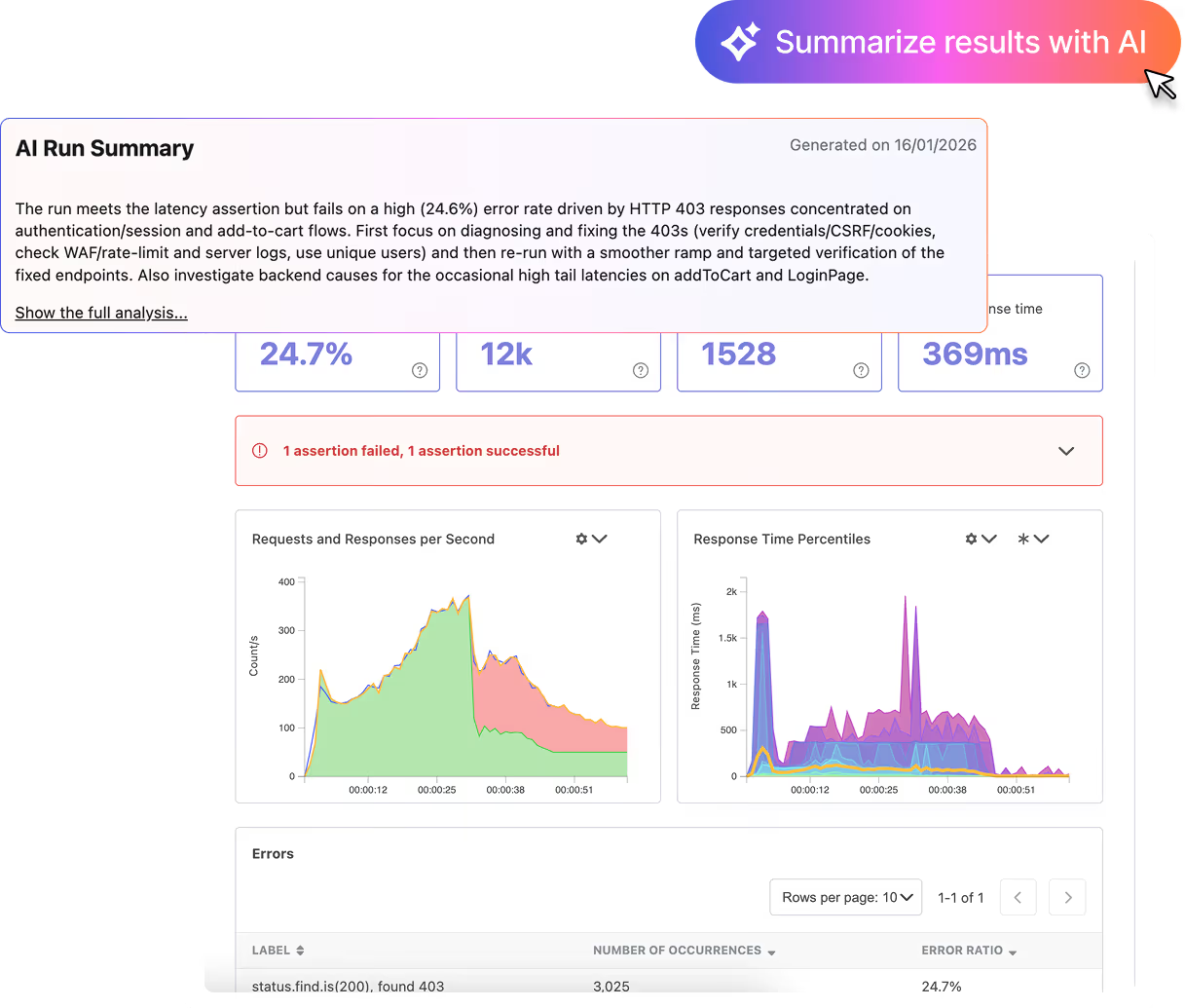
Automated run summaries surface what went wrong without manual analysis. IDE integration and MCP server support bring load testing into the workflows your engineers already use.
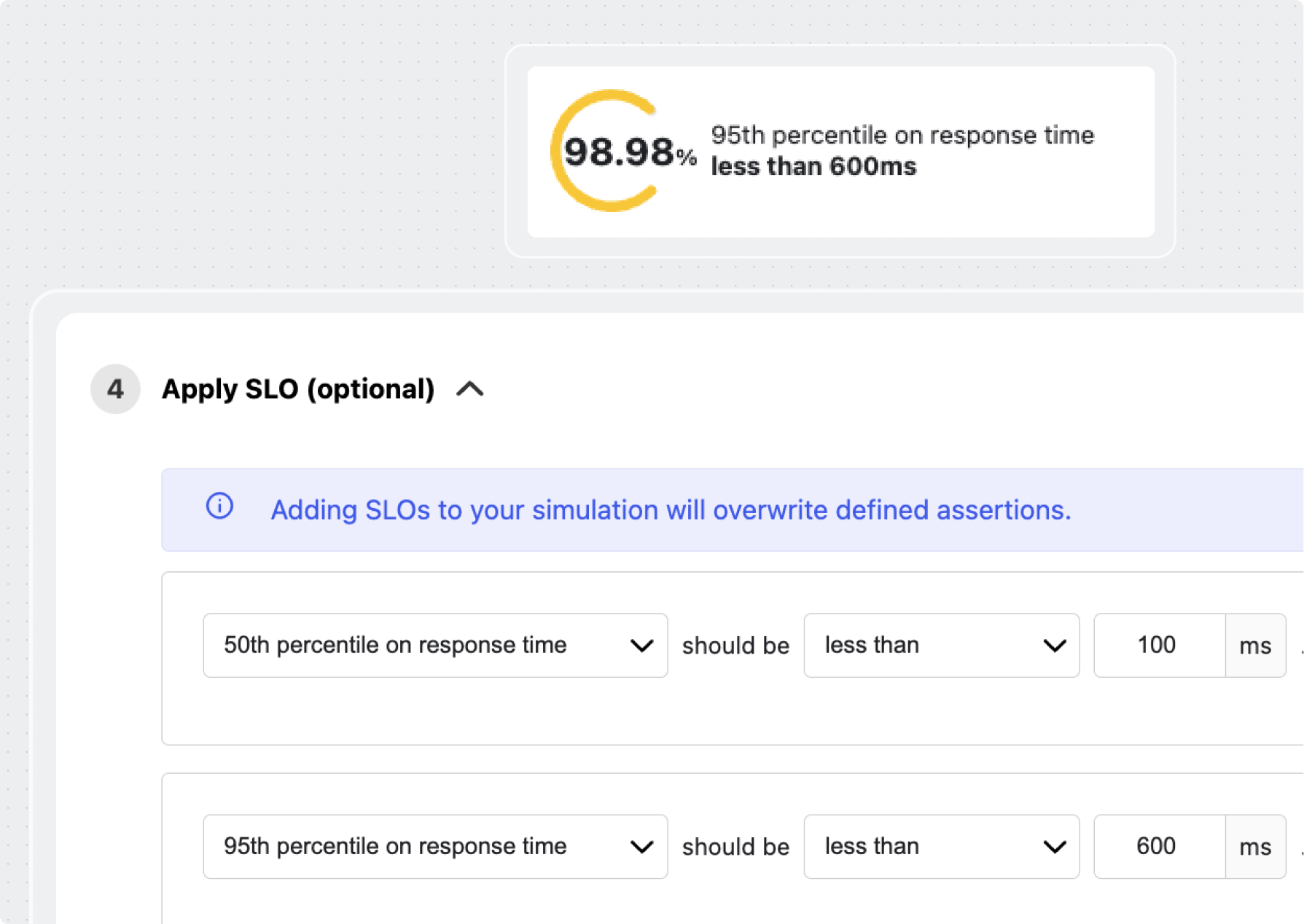
SLOs and compliance scoring
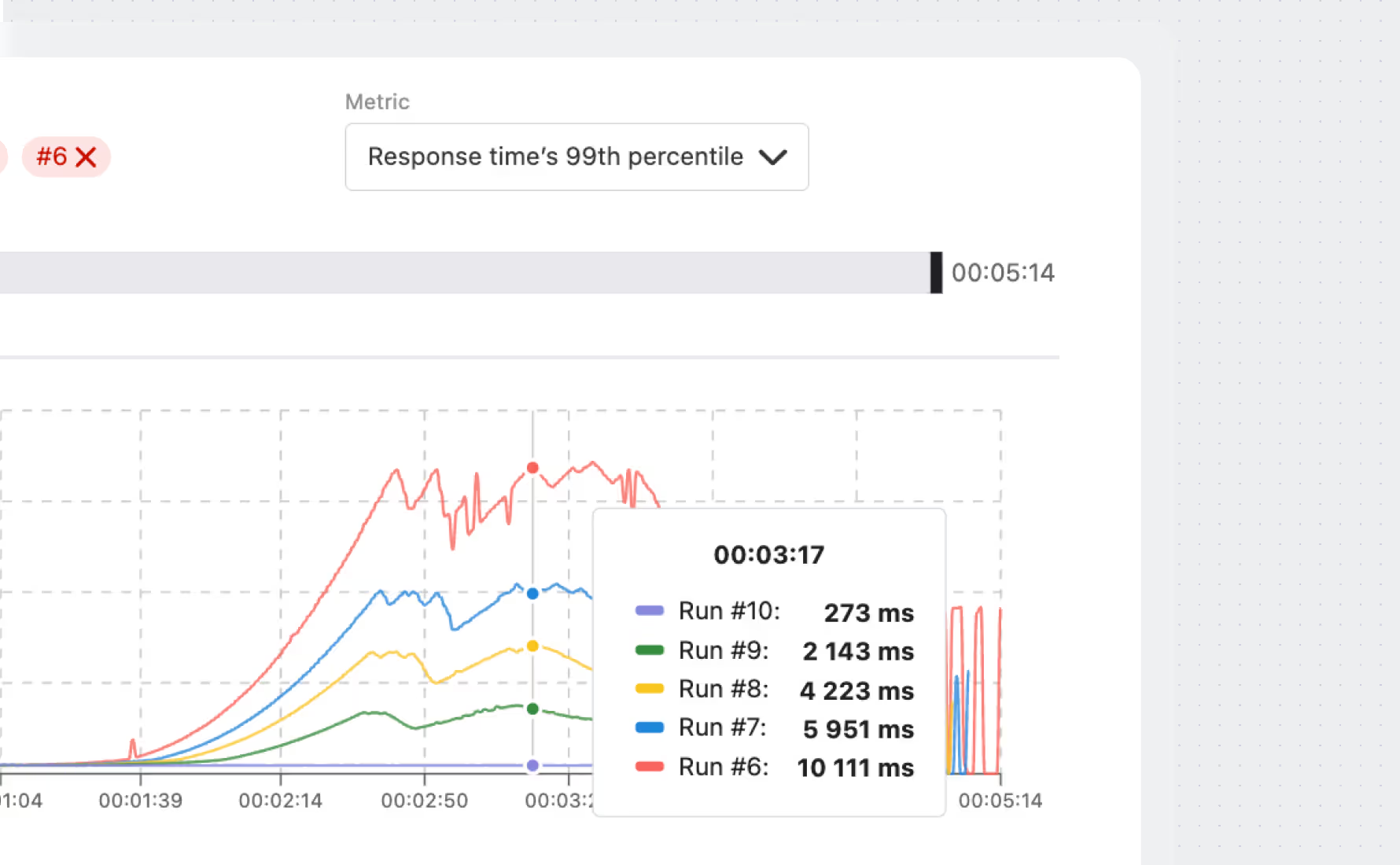
Define response time and error rate targets directly in Gatling Enterprise Edition. Every run returns a compliance score, not a pass/fail, a precise percentage. Know exactly how long your system held the line.

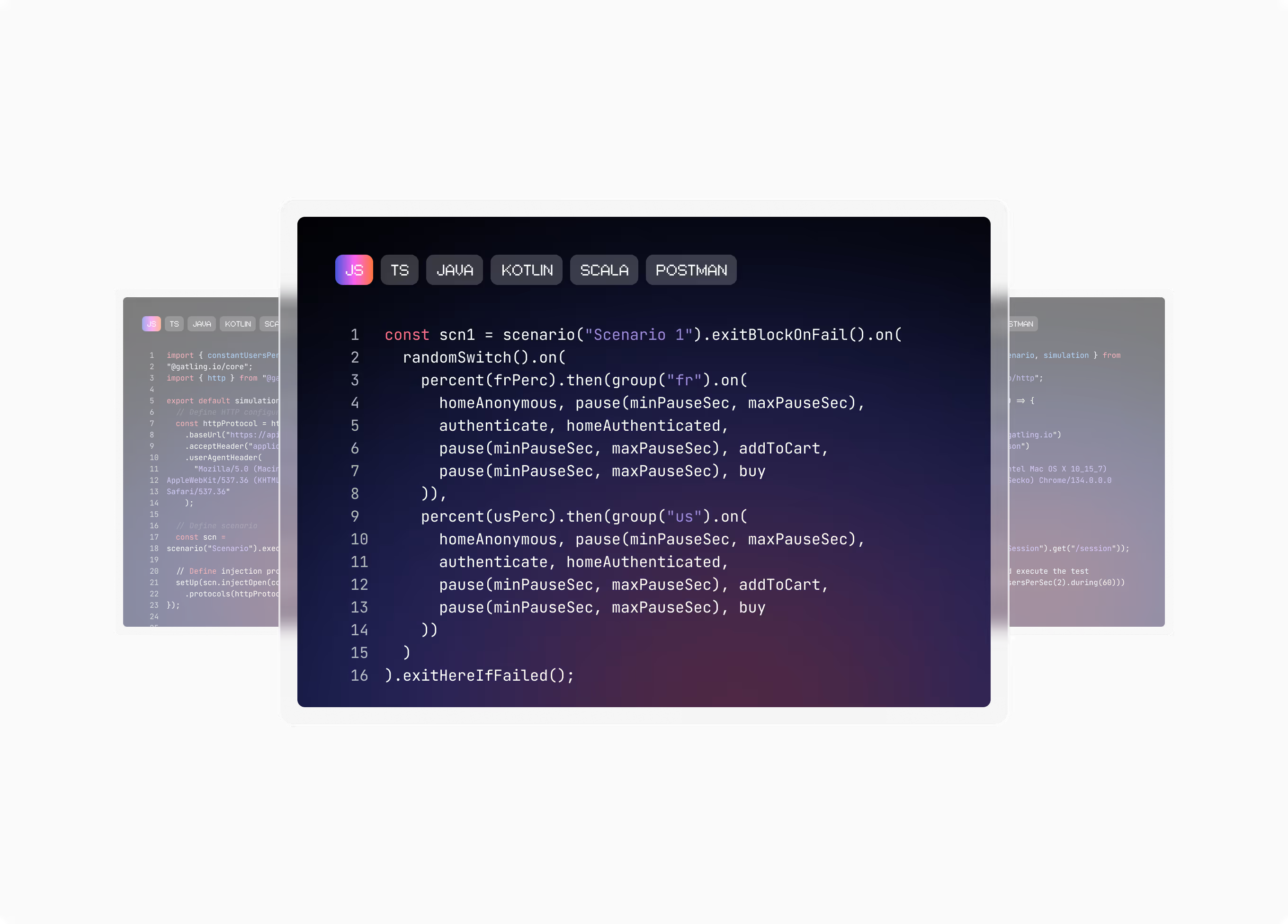
Test as code
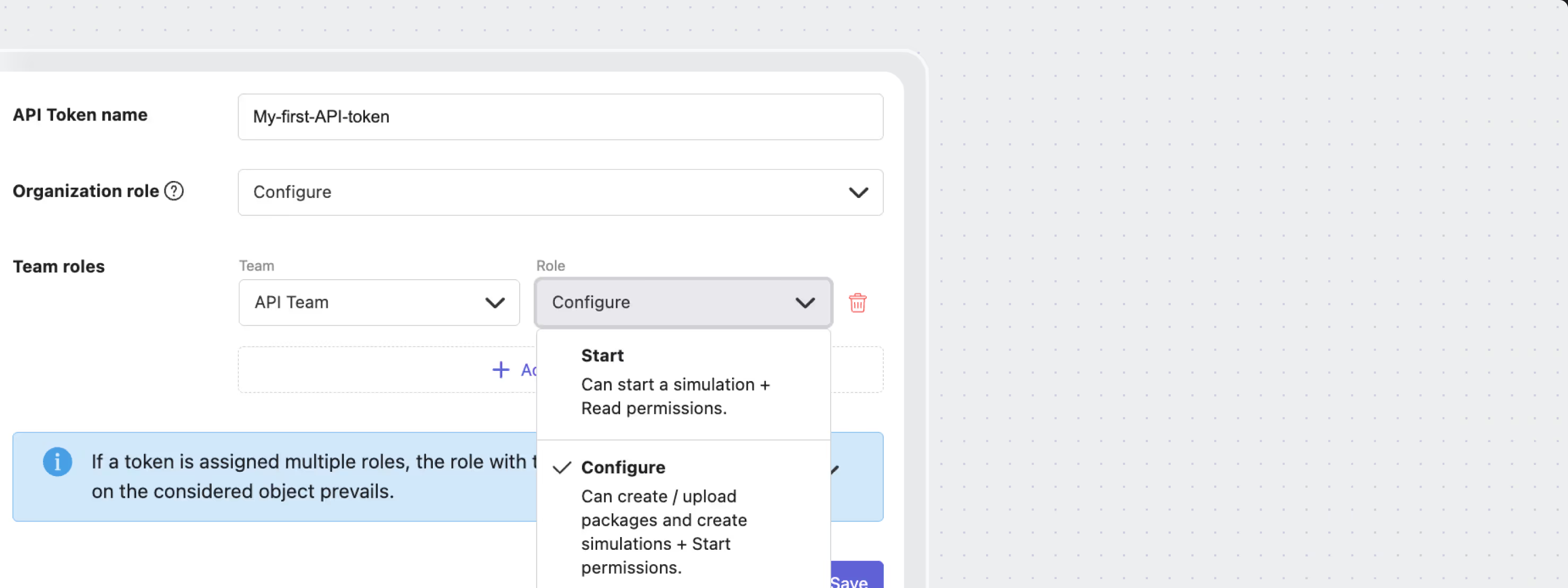
SSO, secrets management, private test packages, and full audit trails for compliance.
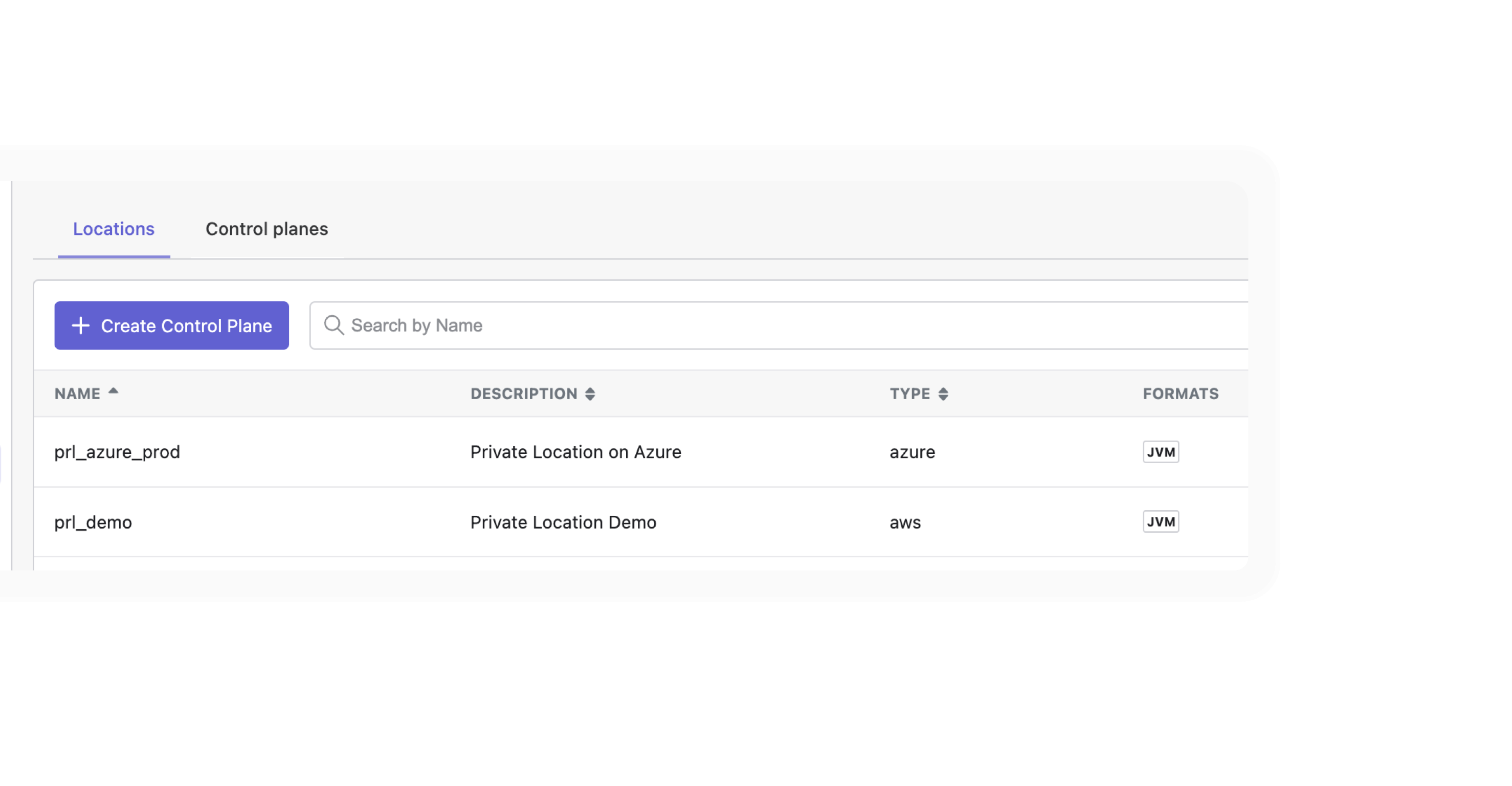
Private locations
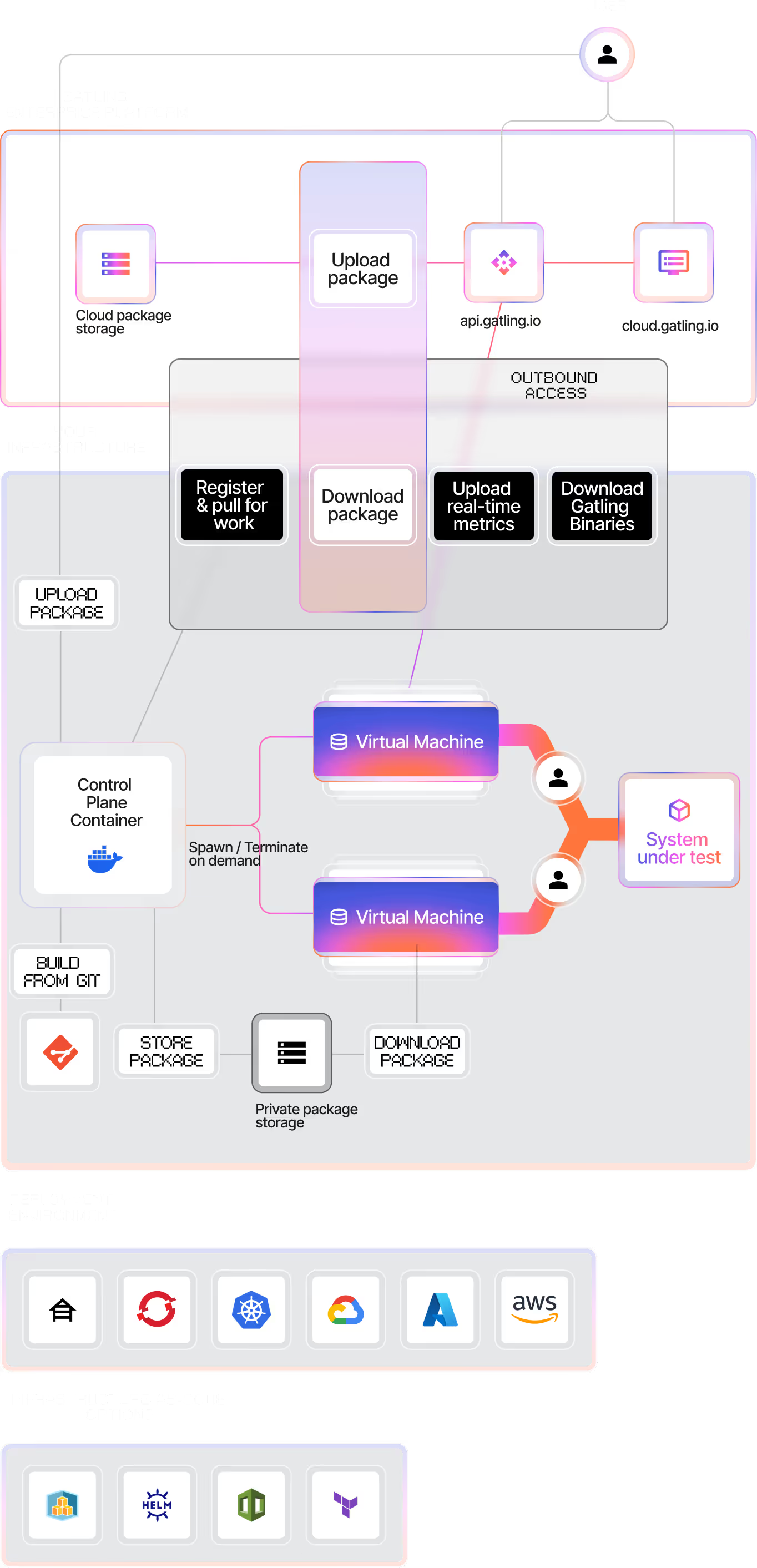
Load generation runs inside your network perimeter. No traffic leaves, no firewall exceptions. Test what's actually in production.

HOW gatling works
From a periodic activity to a continuous discipline
The same SLOs your dashboards already enforce become automated gates in your delivery pipeline.
A payment flow that exceeds your p95 latency threshold fails the build before it reaches the environment your monitoring is watching.
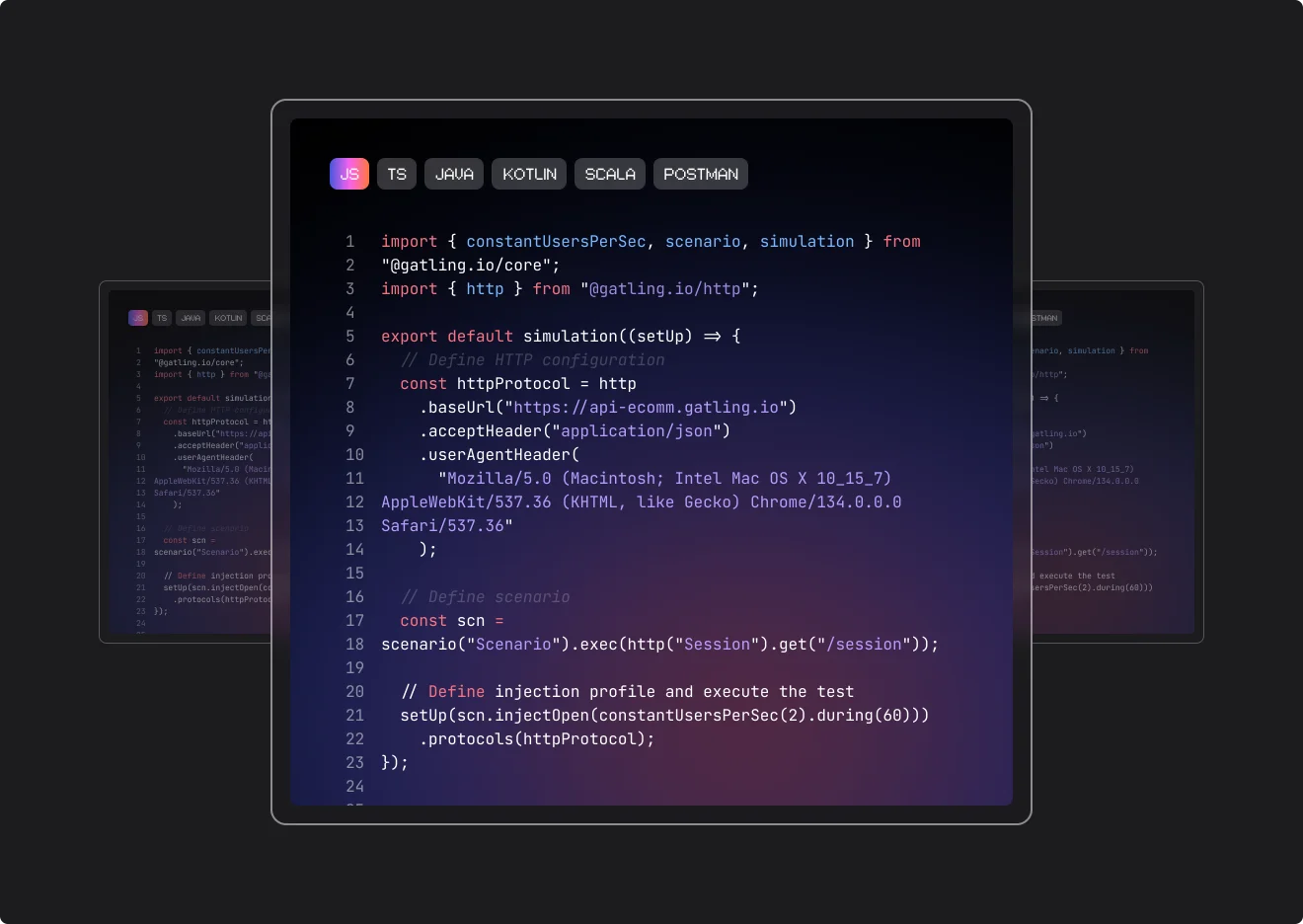
Test as code
Write scenarios in Java, JavaScript, or Scala. Versioned, reviewed, and living alongside your application in CI/CD.
Private load generation
Load runs inside your network perimeter. No traffic leaves, no firewall exceptions. Tests what's actually in production — including VPC-bound payment systems.
SLO compliance scoring
Every run returns a precise compliance percentage — not a pass/fail. Know exactly how long your system held the line.
AI-assisted analysis
Automated run summaries surface what went wrong without manual triage. IDE and MCP integration brings testing into existing workflows.
Maturity framework
Where does your organization stand?
Most financial institutions fall into one of these stages.
The gap between reactive and continuous is where most of the risk lives.
Our aggregation model processes metrics asynchronously, with zero blocking or manual correlation. This allows real-time dashboards, deep insights, and horizontal scalability across distributed load generators.
Load tests run before major releases. Tests are manual, point-in-time, and often disconnected from production SLOs.
Performance tests run in CI/CD pipelines. SLO thresholds are defined and automated. Results are reviewed as part of the release process.
Our aggregation model processes metrics asynchronously, with zero blocking or manual correlation. This allows real-time dashboards, deep insights, and horizontal scalability across distributed load generators.
See where your systems hold before your customers find out
Download the full whitepaper covering banking, capital markets, and insurance use cases. Or speak with our team about running your first test.
Need technical references and tutorials?
Minimal features, for local use only
